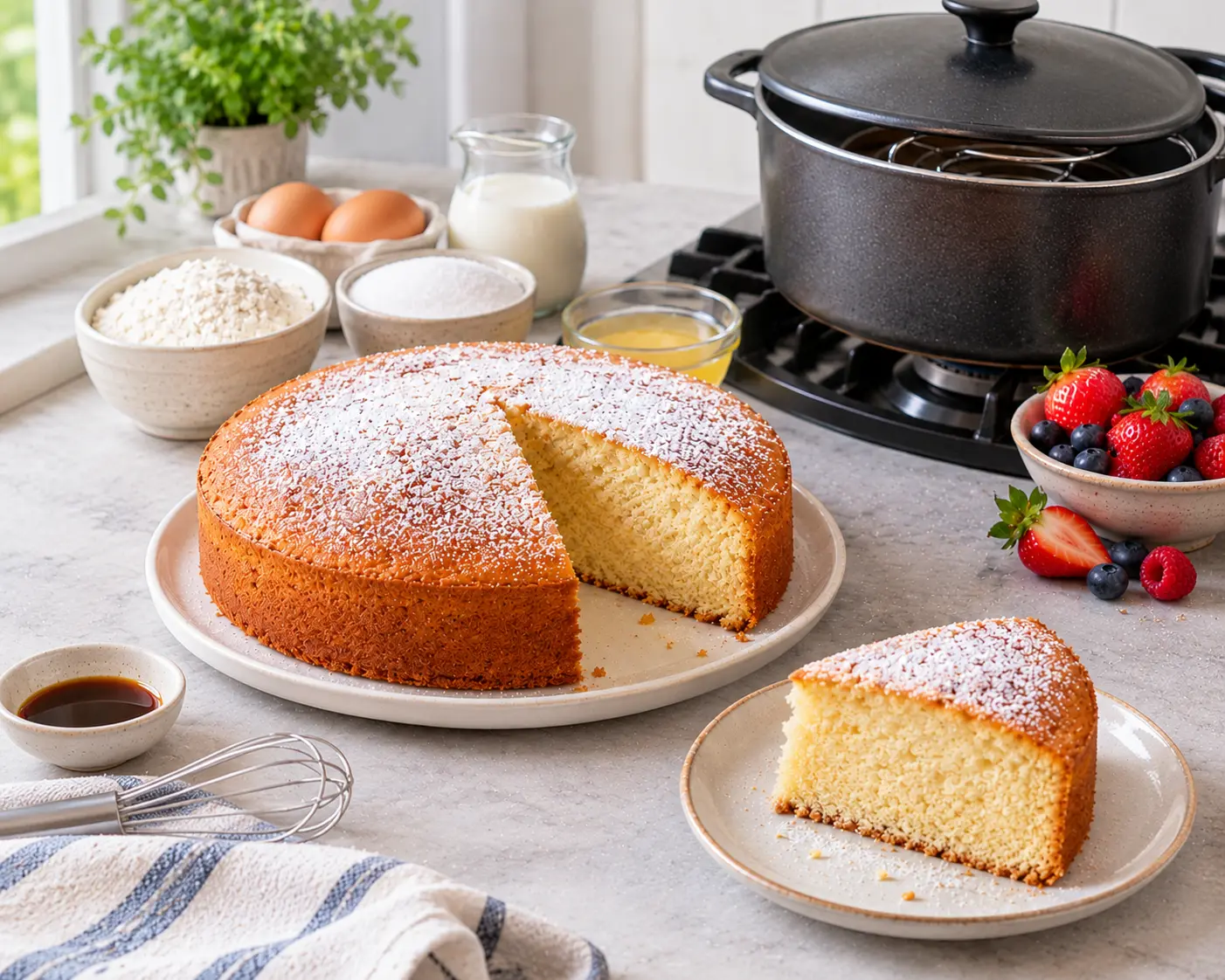
Cake Without Oven: 7 Easy Steps

Want to make a delicious cake without oven at home? You can prepare a soft, fluffy vanilla cake using a stovetop, a heavy-bottomed pot, and simple ingredients from your kitchen. This easy cake without oven recipe is perfect for beginners, small kitchens, and anyone who wants to enjoy homemade cake without special baking equipment.
Making a cake without oven is easier than you might think. With the right pot, a suitable cake pan, and low, steady heat, you can bake a tasty cake on your stovetop. Follow these seven easy steps to prepare the batter, cook the cake, check when it is done, and avoid common baking mistakes.
Can You Make a Cake Without Oven?
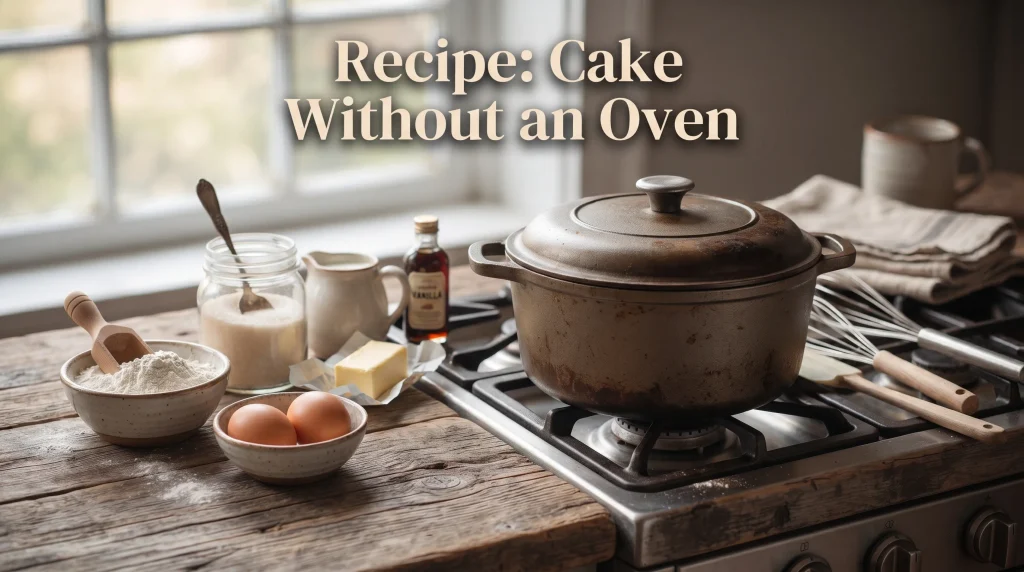
Yes! You can make a cake without oven by using a deep, heavy-bottomed pot with a tight-fitting lid. The covered pot traps heat and allows the cake to cook gradually, similar to baking in a traditional oven.
For the best results, place a small metal rack or trivet inside the pot and set your cake pan on top. This keeps the cake pan away from direct contact with the hot bottom of the pot and helps prevent burning.
The most important rule when making cake without oven is to use low, steady heat. High heat can burn the bottom of the cake before the center is fully cooked.
Easy Cake Without Oven Recipe
This homemade vanilla cake is soft, lightly sweet, and perfect for serving with tea or coffee. You can also decorate it with chocolate icing, whipped cream, or fresh fruit.
Recipe Details
- Preparation time: 15 minutes
- Cooking time: 35–50 minutes
- Total time: 50–65 minutes
- Servings: 6–8
- Cooking method: Stovetop
- Difficulty: Easy
Ingredients for Cake Without Oven
You need the following simple ingredients to prepare this stovetop cake.
- 1½ cups all-purpose flour (190 g)
- ¾ cup sugar (150 g)
- 2 large eggs
- ½ cup milk (120 ml)
- ⅓ cup unsalted butter, melted and cooled (80 g)
- 1½ teaspoons baking powder
- 1 teaspoon vanilla extract
- ¼ teaspoon salt
Measure all ingredients accurately for a soft and fluffy cake. Too much flour can make the cake dry, while old baking powder may prevent it from rising properly.
Equipment You Will Need
Before making cake without oven, gather these items:
- A deep, heavy-bottomed pot with a lid
- A sturdy metal rack or trivet that fits inside the pot
- A 6- or 7-inch cake pan
- Two mixing bowls
- A whisk or hand mixer
- A spatula
- A toothpick
- Oven mitts or heat-resistant gloves
Make sure the cake pan fits inside the pot and the lid closes properly. Use only cookware designed for stovetop use. Never place glass bakeware directly on a burner unless the manufacturer specifically approves it.
How to Make Cake Without Oven: Step-by-Step Instructions
Step 1: Prepare the Pot and Cake Pan
Grease your cake pan with butter or oil and lightly dust it with flour. Alternatively, line the bottom with baking parchment cut to the correct size.
Place a sturdy metal rack or trivet inside your heavy-bottomed pot. The rack should hold the cake pan securely and leave space underneath for heat to circulate.
Cover the empty pot and warm it over low heat for approximately 5–10 minutes. Avoid using high heat because it can make the bottom of the pot excessively hot.
Preparing the pot properly is an important part of making cake without oven because it helps the cake cook more evenly.
Step 2: Mix the Dry Ingredients
Add the all-purpose flour, baking powder, and salt to a medium-sized bowl. Whisk everything together until the ingredients are evenly distributed.
Mixing the dry ingredients first helps the baking powder spread throughout the flour, allowing the cake to rise more evenly.
Set the bowl aside while you prepare the wet ingredients.
Step 3: Combine the Wet Ingredients
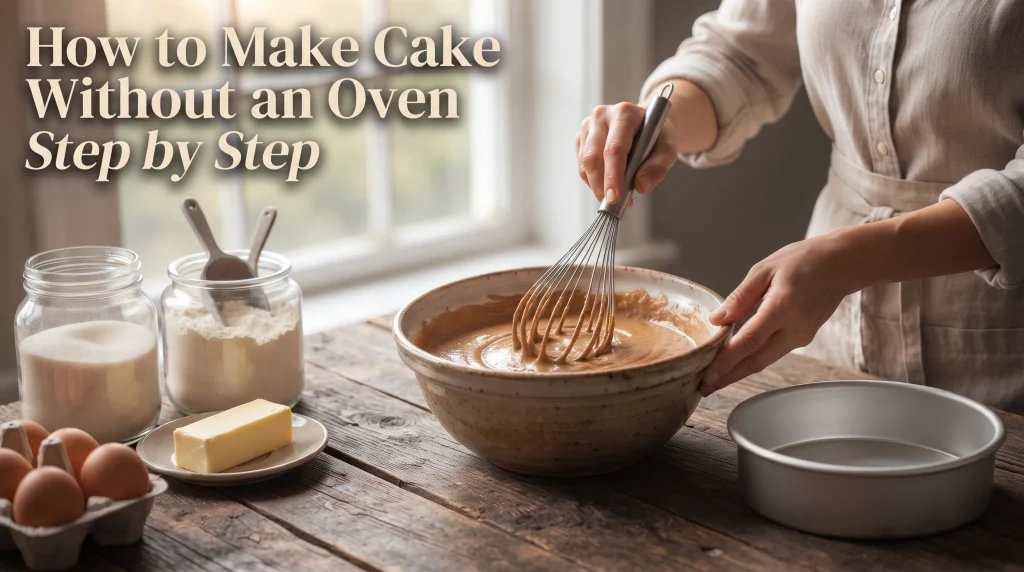
In another bowl, beat the eggs and sugar until the mixture becomes slightly lighter in color and the sugar begins to dissolve.
Add the melted, cooled butter, milk, and vanilla extract. Whisk until the ingredients are well combined.
Gradually add the dry ingredients to the wet mixture in two or three additions. Use a spatula to mix gently until no large patches of dry flour remain.
Avoid overmixing the batter. Too much mixing can develop gluten in the flour and make your homemade cake dense or tough.
Step 4: Pour the Batter Into the Cake Pan
Pour the prepared batter into your greased cake pan. Use a spatula to smooth the surface gently.
Do not fill the pan more than two-thirds full because the cake needs room to rise. If you have extra batter, save it for another batch.
Carefully place the cake pan on the metal rack inside the preheated pot. Cover the pot with its lid.
You are now ready to cook your cake without oven using gentle stovetop heat.
Step 5: Cook the Cake Over Low Heat
Keep the pot covered and cook the cake over the lowest steady heat your stove can maintain. The cooking process usually takes 35–50 minutes, depending on your stove, pot, cake pan, and batter depth.
Avoid lifting the lid repeatedly because doing so releases heat and increases cooking time.
Begin checking the cake after approximately 35 minutes. If condensation collects under the lid, handle it carefully and avoid letting water drip onto the cake.
Do not increase the heat just to speed up the cooking process. Gentle, consistent heat is the key to making a soft cake without oven without burning its base.
Step 6: Check Whether the Cake Is Done
Insert a clean toothpick into the center of the cake. If it comes out clean or with a few dry crumbs, the cake is generally ready.
If the toothpick has wet batter on it, cover the pot again and cook for another 5–10 minutes before checking once more.
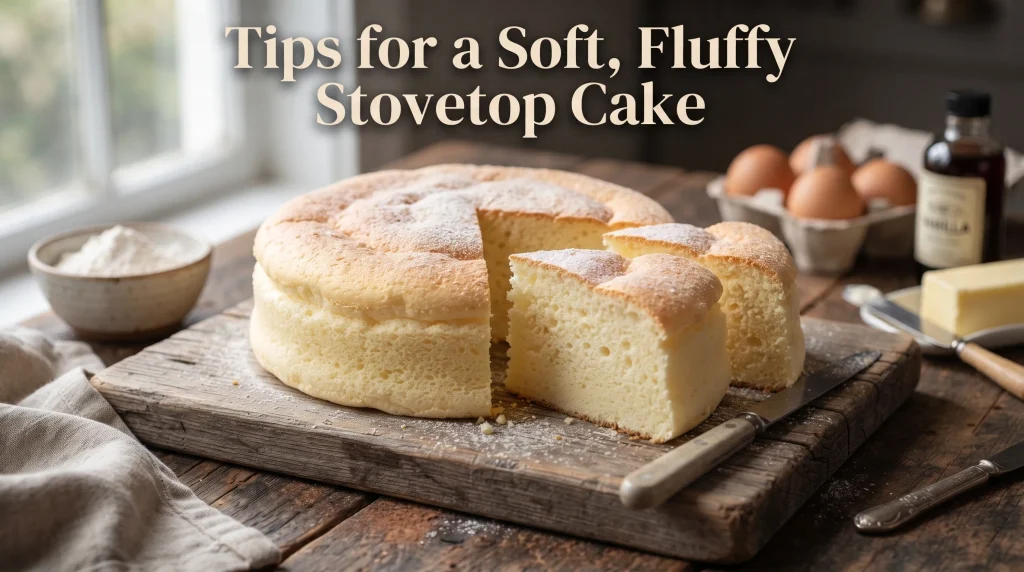
The top of a stovetop cake may remain lighter than the top of a cake baked in an oven. This is normal because the cake does not receive the same direct heat from above.
For an additional food-safety check, a cake containing eggs should reach 160°F (71°C) in the center. A suitable food thermometer can help you check the temperature.
Step 7: Cool and Serve Your Cake
Turn off the heat and carefully remove the cake pan using oven mitts or heat-resistant gloves.
Let the cake cool in the pan for 10–15 minutes. Gently loosen the edges with a knife, then turn the cake out onto a cooling rack.
Allow it to cool further before slicing or adding frosting. Cutting the cake while it is too warm may cause it to crumble.
Serve your cake without oven plain, dusted with powdered sugar, or topped with whipped cream, fresh fruit, or chocolate icing.
Tips for a Soft and Fluffy Cake Without Oven
Follow these simple tips to improve your results.
1. Use fresh baking powder. Expired or improperly stored baking powder may prevent the cake from rising properly.
2. Maintain low heat. High heat can burn the bottom before the center cooks through.
3. Choose a heavy-bottomed pot. Thick cookware distributes heat more evenly than a thin saucepan.
4. Avoid overmixing. Mix the batter just until the ingredients are combined.
5. Keep the lid closed. Opening the pot frequently allows heat to escape and can increase cooking time.
6. Choose the correct cake pan. A pan that is too deep or too small may cause uneven cooking.
7. Check the center, not just the color. A cake can be fully cooked even when its top remains pale.
Once you master this basic cake without oven recipe, experiment with cocoa powder, chocolate chips, lemon zest, or other flavorings.
Common Problems When Making Cake Without Oven
Why Is My Cake Burning on the Bottom?
The heat may be too high, or the cake pan may be touching the bottom of the pot. Reduce the heat and make sure a stable metal rack separates the cake pan from the pot’s base.
Why Is the Middle of My Cake Still Raw?
The cooking time may be too short, the batter may be too deep, or the heat may be uneven. Continue cooking over low heat in 5–10 minute intervals until the center is cooked.
Next time, use an appropriately sized cake pan and avoid opening the lid repeatedly.
Why Is My Cake Dense Instead of Fluffy?
Common causes include too much flour, expired baking powder, overmixing, or incorrect ingredient measurements.
Measure ingredients carefully and mix the batter gently. These small changes can make your cake without oven lighter and softer.
Why Did My Cake Not Rise?
Your baking powder may be old, or the ingredients may not have been measured correctly. Leaving the mixed batter standing for too long before cooking can also affect the result.
Check the freshness of your baking powder and begin cooking soon after preparing the batter.
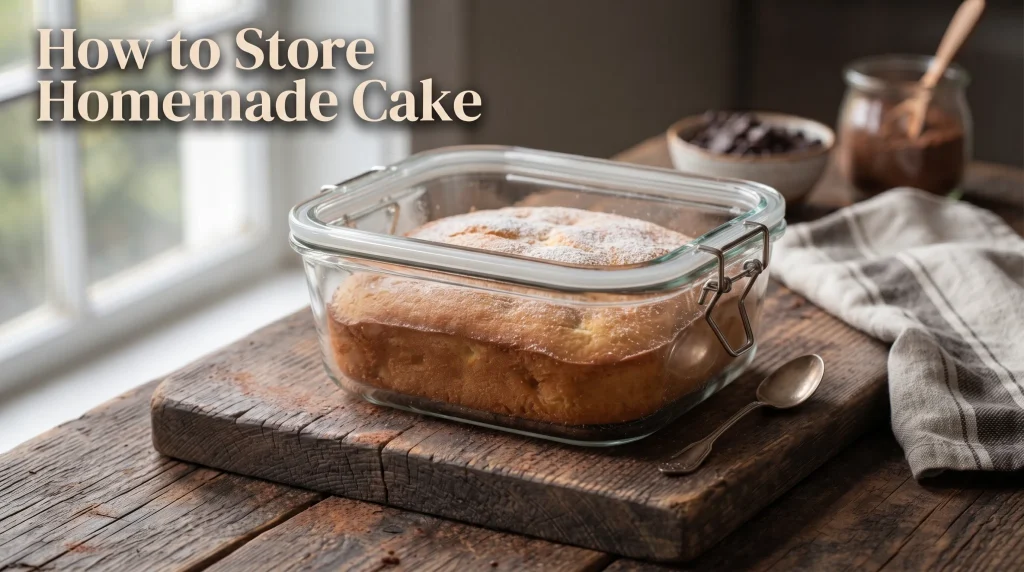
How to Store Homemade Cake
Allow the cake to cool completely before storing it in an airtight container. Proper storage helps preserve its moisture and texture.
At room temperature: An unfrosted cake can generally be kept for about two days in a cool environment.
In the refrigerator: Store the cake in an airtight container for approximately four to five days. Refrigeration may make the texture slightly firmer.
In the freezer: Wrap individual slices tightly and freeze for up to two to three months for the best quality.
Cakes topped with whipped cream, custard, cream cheese frosting, or other perishable ingredients should be refrigerated promptly. Follow local food-safety guidance and discard any cake that shows signs of spoilage.
Frequently Asked Questions
1. Can I Make a Cake Without an Oven or Microwave?
Yes! You can make a cake without oven or microwave by cooking it in a covered, heavy-bottomed pot on your stovetop. A suitable metal rack helps prevent the cake pan from touching the hot base directly.
2. How Long Does a Stovetop Cake Take to Cook?
A small stovetop cake generally takes 35–50 minutes over low heat. The exact time depends on the stove, pot, cake pan, and thickness of the batter.
3. Can I Make Cake Without Oven in a Normal Pot?
Yes, provided the pot is deep, heavy-bottomed, suitable for stovetop cooking, and large enough to hold a stable rack and cake pan with the lid closed.
4. Can I Make Cake Without Oven on a Gas Stove?
Yes. Use a low, steady flame, a heavy-bottomed pot, and a sturdy metal trivet. Avoid high flames because they can burn the bottom before the center is fully cooked.
5. How Do I Know When a Cake Without Oven Is Ready?
Insert a toothpick into the center. If it comes out clean or with a few dry crumbs, the cake is generally done. If wet batter remains, continue cooking for another 5–10 minutes and check again.
6. Can I Make Chocolate Cake Without Oven?
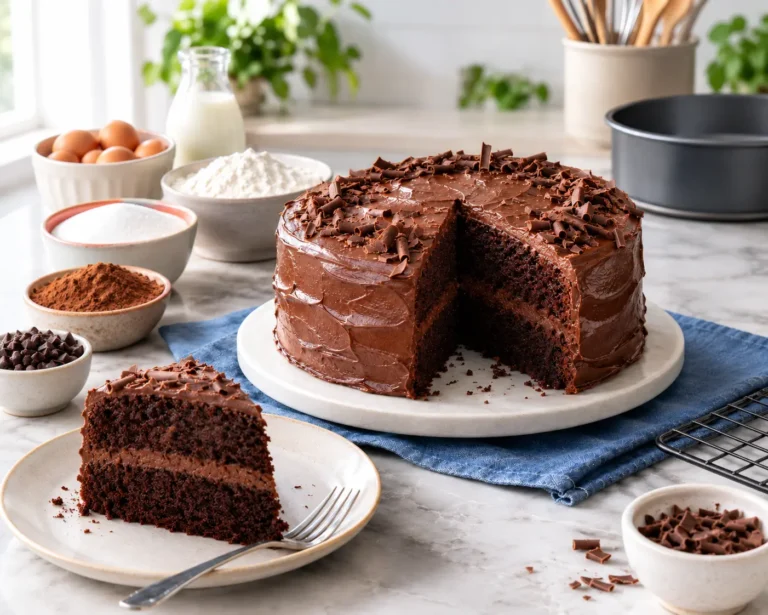
Yes. You can adapt a stovetop cake recipe by replacing some of the flour with unsweetened cocoa powder. However, cocoa powder absorbs moisture, so the liquid balance may need adjustment. For reliable results, follow a tested chocolate stovetop cake recipe.
Conclusion
Making a cake without oven is a simple and practical way to enjoy homemade baking with everyday kitchen ingredients. You do not need expensive equipment or a traditional oven to prepare a soft, delicious vanilla cake.
The secret is to prepare the batter correctly, use a heavy-bottomed pot with a sturdy metal rack, and maintain low, steady heat throughout cooking. Check the center for doneness instead of relying only on the cake’s color.
With these seven easy steps, even beginners can learn how to make cake without oven at home. Once you are comfortable with the method, try different flavors and toppings to create a homemade dessert your family and friends will enjoy.