Ripe Avocado: 7 Easy Ripeness Tests

Knowing how to choose a ripe avocado can make a big difference when preparing guacamole, avocado toast, salads, and sandwiches. Sometimes an avocado looks perfect on the outside but is too hard to mash. In other cases, it may be too soft, bruised, or overripe. Fortunately, there are several simple ways to check whether an avocado is ready to eat.
The best way to identify a ripe avocado is to check its firmness gently. A ripe avocado should yield slightly when pressed in your palm without feeling mushy. Skin color, the stem area, and the overall appearance can also provide useful clues. By combining these simple tests, you can choose a ripe avocado with greater confidence.
Whether you are shopping for fresh avocados or checking fruit at home, this guide explains how to recognize ripeness, speed up the ripening process, store avocados correctly, and identify signs of spoilage.
How to Tell If an Avocado Is Ripe
A ripe avocado has a slightly soft texture and creamy flesh that is easy to slice or mash. However, firmness and skin color can vary depending on the avocado variety. For the most accurate result, examine several signs instead of relying on just one.
1. Check the Firmness Gently
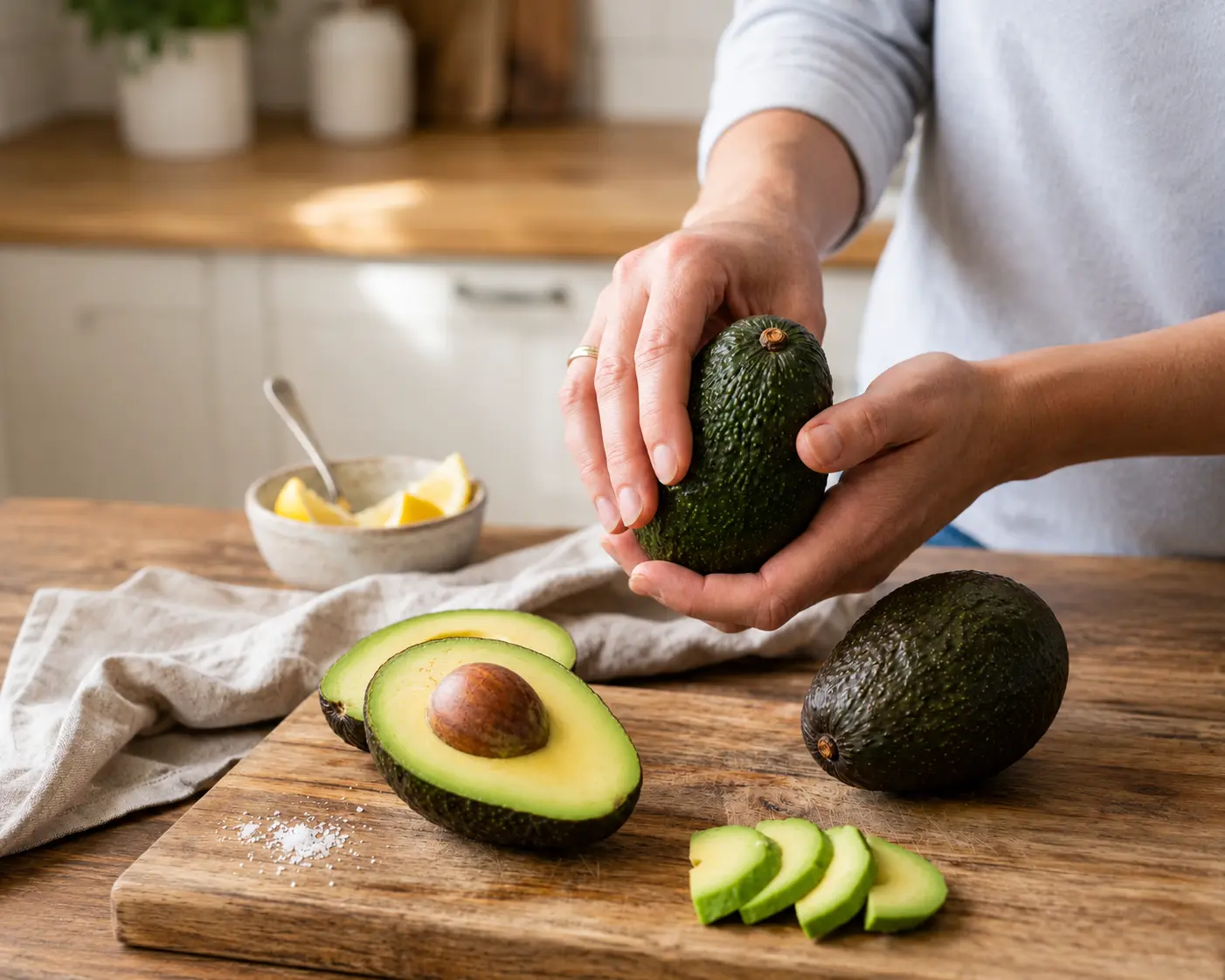
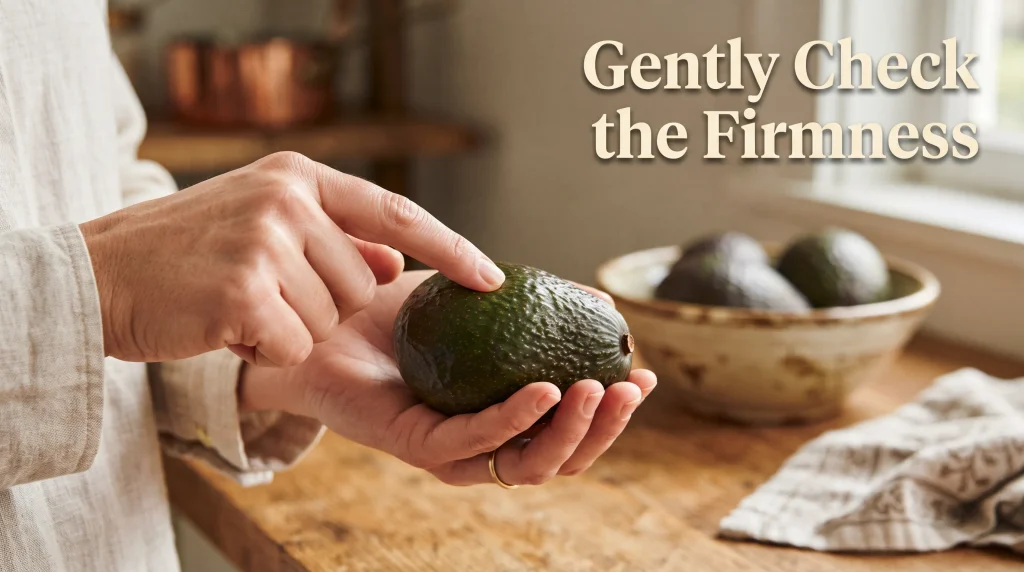
Firmness is one of the most reliable ways to determine whether an avocado is ripe. Place the fruit in your palm and gently press it with your fingers.
A ripe avocado should give slightly under gentle pressure but should not collapse or feel excessively soft.
- Very hard: The avocado is unripe and needs more time at room temperature.
- Slightly soft: The avocado is probably ripe and ready to eat.
- Very soft or mushy: The avocado may be overripe or bruised.
- Deeply indented: The fruit may have damaged flesh underneath the skin.
Avoid pressing the same spot repeatedly or squeezing with your fingertips. Excessive pressure can bruise the flesh and cause brown patches inside.
2. Observe the Skin Color
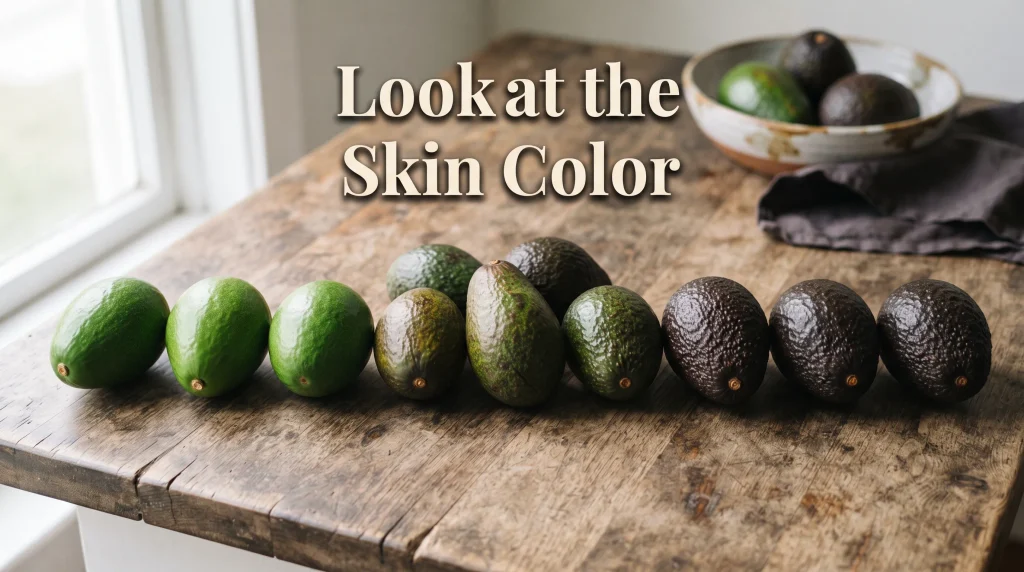
Skin color can help you identify a ripe avocado, but the results depend on the variety.
Hass avocados usually change from bright green to a darker green or nearly black color as they ripen. If a Hass avocado is still bright green and feels very hard, it probably needs more time.
However, many other avocado varieties remain green even when fully ripe. For these varieties, firmness is generally a better indicator than color.
If you are unsure which variety you have, check the texture and look for damage rather than judging ripeness by color alone.
3. Examine the Stem Area
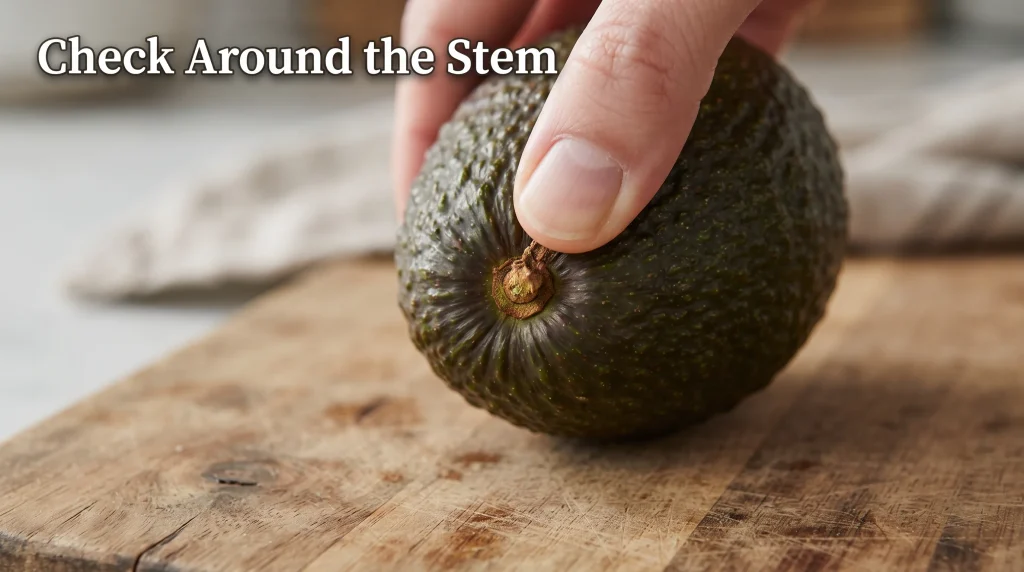
The small stem area at the top of an avocado can provide another clue about ripeness.
If the stem comes away easily, the flesh underneath may appear green or yellow-green when the avocado is ripe. Brown flesh beneath the stem can indicate over-ripeness or internal discoloration.
However, the stem test is not always reliable. Avoid forcing the stem off a firm avocado because exposing the flesh can increase damage and discoloration.
For the best result, combine this test with a gentle firmness check.
4. Look for Bruises and Damaged Skin
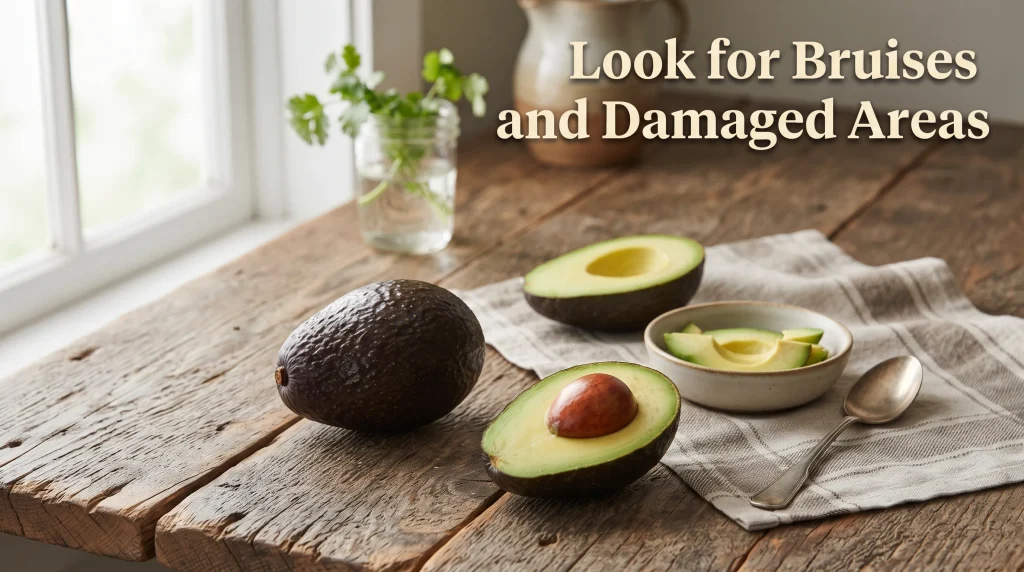
A ripe avocado should feel relatively consistent rather than extremely soft in one area and hard in another.
Look for large sunken patches, cracked skin, leaking liquid, or extensive dark damage. These signs may indicate bruising or deterioration.
Small surface marks do not automatically mean an avocado is spoiled. Once you cut it open, check whether the flesh looks and smells normal.
If the avocado has visible mold, an unpleasant rancid smell, or extensive watery breakdown, it is safer to discard it.
5. Choose the Right Ripeness for Your Recipe
The best ripeness level depends on how you plan to use the fruit.
- For guacamole: Choose a ripe avocado with soft, creamy flesh that mashes easily.
- For avocado toast: Look for an avocado that spreads smoothly without being watery.
- For salads: Choose fruit that gives slightly but still holds its shape when sliced.
- For sandwiches: Select an avocado that is creamy but firm enough to cut into neat slices.
- For later use: Buy a slightly firm avocado and allow it to ripen at home.
Choosing the right ripe avocado helps improve the texture and flavor of your meals.
6. Check the Flesh After Cutting
If you have already cut open an avocado, examine the flesh before using it.
Healthy avocado flesh is generally creamy green or yellow-green, although some varieties naturally have different shades. Small brown spots can result from bruising or oxidation and do not always mean the entire fruit is spoiled.
If the flesh looks normal and smells fresh, you may trim away small bruised areas. However, discard the fruit if you notice mold, a sour or rancid odor, or extensive watery deterioration.
Remember that a ripe avocado can develop brown surface discoloration after exposure to air. This is often enzymatic browning rather than spoilage.
7. Consider How Quickly You Need It
If you need an avocado today, choose one that yields gently to pressure. If you plan to use it in several days, a firmer avocado may be a better choice.
A naturally ripened avocado usually develops a better flavor and creamy texture than fruit that has simply been heated to soften it.
Planning ahead helps you avoid cutting an avocado before it is ready or allowing it to become overripe before you can use it.
Ripe Avocado Ripeness Chart
Use this simple chart to identify the different stages of avocado ripeness.
| Ripeness stage | Signs to look for | What to do |
|---|---|---|
| Unripe | Very hard with little or no give | Leave at room temperature |
| Almost ripe | Slightly softer but still fairly firm | Check again the next day |
| Ripe | Yields gently to light pressure | Eat now or refrigerate |
| Overripe | Very soft, bruised, or deeply indented | Cut open and inspect carefully |
| Spoiled | Mold, foul odor, leaking liquid, or extensive decay | Discard the avocado |
Softness alone does not mean an avocado is spoiled. A ripe avocado should have a pleasant smell and creamy flesh, while a spoiled avocado may show additional warning signs.
How to Ripen an Avocado Faster
If your avocado is still hard, you can help it ripen naturally at home. Avocados continue to soften after harvesting, and the time required depends on their maturity, temperature, and condition.
Use the Paper Bag Method
The paper bag method is a simple way to encourage an unripe avocado to ripen faster.
- Place the avocado in a clean paper bag.
- Add a ripe banana or apple if you want to encourage faster ripening.
- Fold the top of the bag loosely.
- Keep the bag at room temperature, away from direct sunlight and excessive heat.
- Check the avocado daily using gentle pressure.
- Once it becomes slightly soft, eat it or place it in the refrigerator.
Bananas and apples release ethylene, a natural plant hormone that encourages fruit ripening. A paper bag helps retain some of this gas around the avocado.
The exact timing varies, so check the fruit regularly rather than relying on a fixed number of hours or days.
Should You Use an Oven or Microwave?
Heating an unripe avocado in an oven or microwave may soften it, but it does not reproduce natural ripening. The fruit may become warm or soft without developing the same creamy texture and flavor as a naturally ripe avocado.
For the best taste and texture, allow the avocado to ripen at room temperature. If you need a creamy ingredient immediately, consider using another ripe fruit or adjusting your recipe.
How to Store a Ripe Avocado
Correct storage can help keep a ripe avocado fresh for longer.
Storing a Whole Avocado
Once an avocado is ripe, place it in the refrigerator to slow further ripening.
Keep the fruit whole and check it regularly. How long it stays fresh depends on its ripeness when refrigerated and the conditions in which it is stored.
Unripe avocados should generally remain at room temperature until they soften. Refrigerating them too early can slow the ripening process.
Storing a Cut Avocado
Cut avocado flesh can turn brown when exposed to air. This discoloration is usually caused by oxidation and does not automatically mean the fruit is unsafe to eat.
To help preserve a cut avocado:
- Apply a little lemon or lime juice to the exposed flesh.
- Store it in an airtight container.
- Refrigerate it promptly.
- Use it as soon as practical.
- Check its smell, texture, and appearance before eating.
If only the surface has turned slightly brown and the flesh underneath looks and smells normal, the discoloration may be cosmetic. Discard the avocado if it develops mold, an unpleasant smell, or other signs of spoilage.
How to Tell If an Avocado Is Overripe
An overripe avocado is not always spoiled, but it should be inspected carefully before use.
Signs of an Overripe Avocado
- Very soft flesh that may be difficult to slice.
- Brown spots or streaks inside.
- Bruised areas beneath the skin.
- A texture that is unusually watery or mushy.
Small brown areas can result from bruising or oxidation. If the remaining flesh looks and smells normal, you may trim away small affected areas.
When to Throw an Avocado Away
Discard an avocado if you notice:
- Visible mold.
- A sour, rancid, or otherwise unpleasant odor.
- Extensive watery breakdown or rotting.
- Leaking liquid or significant deterioration.
Do not taste an avocado to determine whether it is safe if it already shows obvious signs of spoilage.
Easy Avocado Toast Recipe
Once you have a ripe avocado, making avocado toast is quick and easy. This simple recipe works well for breakfast, lunch, or a light snack.
Ingredients
- 1 medium ripe avocado
- 2 slices of bread
- 1 teaspoon lemon or lime juice
- Salt, to taste
- Black pepper, to taste
- Red pepper flakes, optional
Instructions
- Toast the bread until golden and crisp.
- Cut the avocado lengthwise, remove the pit carefully, and scoop the flesh into a bowl.
- Mash the avocado with lemon or lime juice.
- Add salt and black pepper to taste.
- Spread the mixture over the toasted bread.
- Sprinkle with red pepper flakes or your favorite toppings and serve immediately.
A ripe avocado should mash easily into a creamy spread. If the flesh is still too firm, allow the fruit more time to ripen instead of trying to force it into a smooth texture.
Final Thoughts
Learning how to identify a ripe avocado makes shopping, meal preparation, and storage much easier. The most useful test is gentle pressure: the fruit should yield slightly without feeling mushy.
Skin color and the stem area can provide additional clues, but neither is completely reliable on its own. Check the overall condition of the fruit, allow unripe avocados to soften naturally, and refrigerate ripe fruit when you are not ready to eat it.
With these simple tips, you can choose a ripe avocado for guacamole, toast, salads, and many other delicious meals while reducing unnecessary food waste.