7 Best Tips for Crispy French Fries

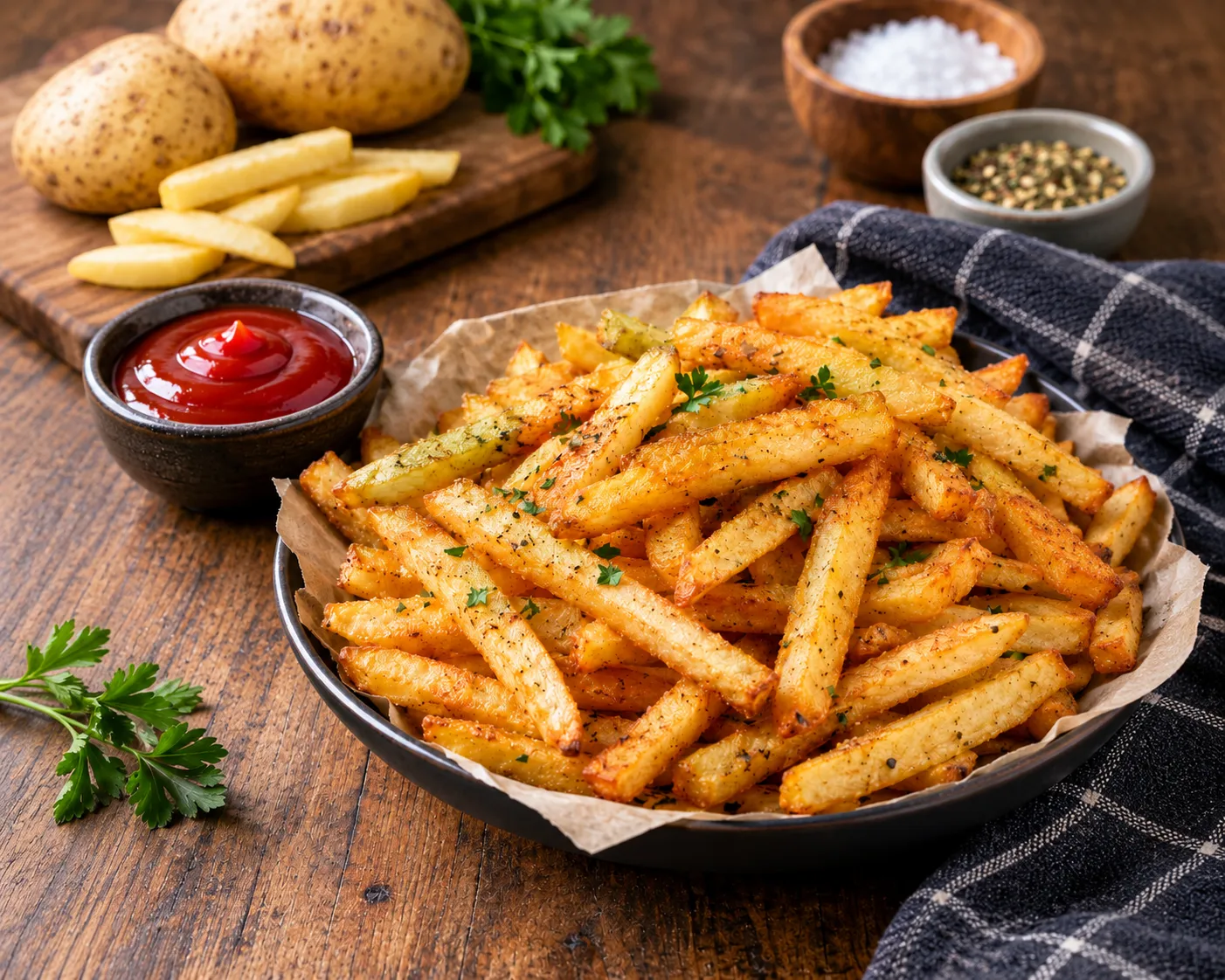
Homemade French Fries can be just as delicious as restaurant-style fries when you get the texture right. The perfect French Fries are golden and crunchy on the outside, with a soft and fluffy center. You do not need professional kitchen equipment or complicated ingredients to make crispy French Fries at home.
The secret to delicious French Fries is choosing the right potatoes, cutting them evenly, removing excess surface starch, drying them thoroughly, and frying them at the correct temperature. These simple techniques help prevent soggy, pale, or unevenly cooked fries.
In this guide, you will learn how to make crispy French Fries from scratch, which ingredients to use, how to fry potatoes properly, and how to fix common problems.
What Is the Secret to Crispy French Fries?
Perfect French Fries start with the right potatoes and careful preparation. Potatoes contain starch and moisture, so the goal is to cook the inside until fluffy while developing a crisp, golden exterior.
1. Choose the Best Potatoes
Starchy potatoes, such as Russet potatoes in the United States, are excellent for homemade French Fries. They contain plenty of starch and relatively little moisture, helping create a fluffy interior and crispy outside.
You can also use floury potatoes commonly found in the UK and Europe. Waxy potatoes work too, but they usually produce a firmer texture rather than the soft center associated with classic French Fries.

2. Rinse or Soak the Potatoes
Rinsing cut potatoes removes loose surface starch, which helps prevent the potato sticks from sticking together during cooking.
For better results, soak the cut potatoes in cold water for 20–30 minutes. Drain them thoroughly afterward and prepare them for frying.
3. Maintain the Correct Oil Temperature
Oil temperature is essential for crispy French Fries. If the oil is too cool, the potatoes may absorb excess oil and become greasy. If it is too hot, the outside can brown before the center cooks properly.
The double-frying method solves this problem by cooking the potatoes at a lower temperature first and finishing them at a higher temperature.
Homemade Crispy French Fries Recipe
This easy French Fries recipe uses the double-frying technique to create a golden crust and fluffy center. Serve these homemade fries with burgers, sandwiches, grilled chicken, or your favorite dipping sauce.
Quick Recipe Overview
- Preparation time: 15 minutes
- Optional soaking time: 20–30 minutes
- Cooking time: Approximately 15–20 minutes per batch
- Servings: 4
- Difficulty: Easy to moderate
Ingredients
- 4 medium Russet potatoes (800 g–1 kg total)
- Neutral frying oil, such as canola, refined sunflower, or peanut oil
- ½–1 teaspoon salt, or to taste
- Black pepper, optional
- Paprika or garlic powder, optional
Use enough oil to provide a suitable depth for frying, while keeping the pot below its recommended fill level. The exact amount depends on your equipment.
How to Make French Fries Step by Step
Step 1: Wash, Peel, and Cut the Potatoes
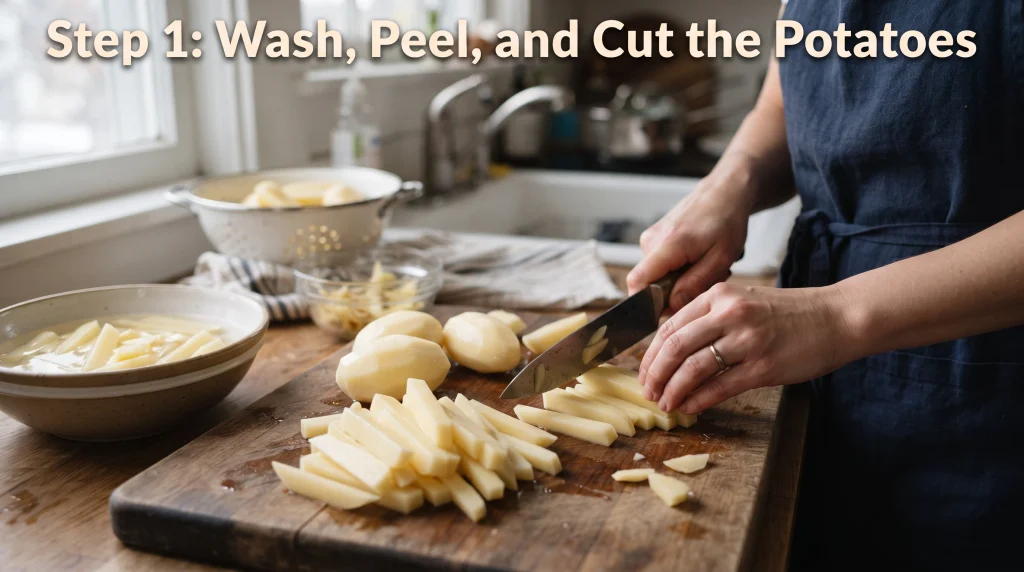
Wash the potatoes thoroughly under running water. Peel them if desired, or leave the skin on after cleaning it well.
Cut the potatoes into evenly sized sticks, approximately ¼ inch (6 mm) thick. Uniform pieces help the French Fries cook at the same rate.
Thin sticks cook faster and may become crisp throughout, while thicker pieces usually retain a softer center. Try to keep all the pieces similar in size.
Step 2: Rinse or Soak the Potato Sticks
Place the cut potatoes in a large bowl of cold water. Swirl them gently, drain the cloudy water, and repeat until the water becomes clearer.
For additional starch removal, soak the potatoes in fresh cold water for 20–30 minutes. This step can help prevent sticking and improve the texture of homemade French Fries.
Drain the potatoes completely before moving to the next step.
Step 3: Dry the Potatoes Thoroughly
Spread the potato sticks over a clean kitchen towel or paper towels. Blot them until the surfaces are completely dry.
This step is important for both crispiness and safety. Water contacting hot oil can cause violent splattering, so never add wet potatoes to hot oil.
Allow the dried potatoes to rest on a clean tray for a few minutes if necessary.
Step 4: Fry the Potatoes for the First Time
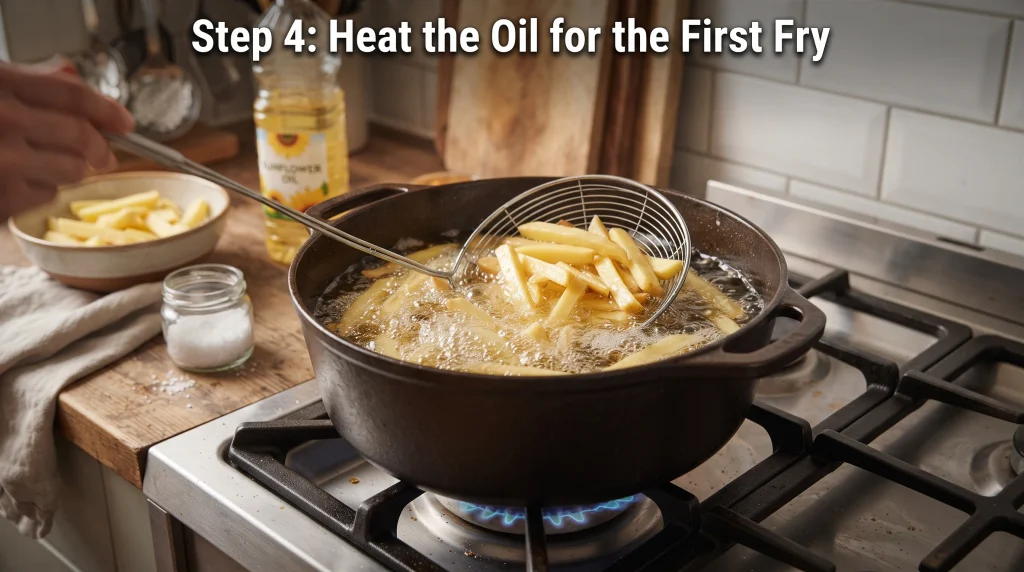
Pour the oil into a heavy, deep saucepan or suitable deep fryer. Leave plenty of space above the oil to accommodate bubbling.
Heat the oil to approximately 325°F (163°C). A kitchen thermometer is the most reliable way to check the temperature.
Carefully lower a small batch of dry potato sticks into the oil using a slotted spoon or frying basket. Fry for approximately 4–6 minutes, depending on thickness.
The potatoes should soften and become pale without developing much color. This first stage cooks the inside of the French Fries rather than creating the final crispy crust.
Avoid overcrowding the pot because too many potatoes can lower the oil temperature.
Step 5: Drain and Rest the Fries
Remove the partially cooked potatoes and place them on a wire rack over a tray. Let them rest for 10–15 minutes.
The resting period allows excess oil to drain and helps prepare the potatoes for the second fry. A wire rack also allows air to circulate around the fries, reducing trapped steam.
If you are cooking several batches, allow the oil to return to the appropriate temperature before adding more potatoes.
Step 6: Fry Again for a Golden, Crispy Finish
Increase the oil temperature to approximately 375°F (190°C).
Carefully add the partially cooked potatoes in small batches. Fry for another 2–4 minutes, or until the French Fries turn golden and develop a crisp exterior.
Cooking time depends on the thickness of the potatoes and the equipment being used. Watch the color and texture rather than relying only on the timer.
Remove the finished fries with a slotted spoon and place them on a clean wire rack or paper towels.
Step 7: Season and Serve Immediately
Season the hot French Fries with salt and any additional spices you prefer. Toss gently to distribute the seasoning evenly.
Serve immediately for the best crunch. If you need to keep a large batch warm, arrange the fries in a single layer on a rack in a warm oven rather than covering or stacking them.

7 Best Tips for Extra Crispy French Fries
Follow these practical tips to improve your results every time you prepare homemade French Fries.
- Choose starchy potatoes: Russet potatoes are ideal for a fluffy center and crunchy exterior.
- Cut evenly: Uniform potato sticks cook more consistently.
- Remove excess starch: Rinse or soak the potatoes before cooking.
- Dry thoroughly: Surface moisture causes splattering and can interfere with crisping.
- Use a thermometer: Maintain the recommended oil temperatures for both frying stages.
- Fry in small batches: This helps prevent sudden temperature drops.
- Avoid trapped steam: Drain the fries on a wire rack and do not cover them while hot.
You can prepare the potatoes ahead of time by cutting and storing them submerged in cold water in the refrigerator. Drain and dry them thoroughly immediately before frying.
Common French Fries Problems and How to Fix Them
Even a good recipe can produce disappointing results if the preparation or cooking conditions are not right.
Why Are My French Fries Soggy?
Soggy French Fries usually result from oil that is too cool, overcrowded batches, or trapped steam after cooking.
To fix this, maintain the recommended oil temperature, fry smaller batches, and spread the finished fries on a wire rack.
Why Are My Fries Brown Outside but Hard Inside?
This often happens when the oil is too hot or the potato sticks are too thick.
Use the double-frying method. Cook the potatoes at a lower temperature first, then finish at a higher temperature to create the crispy crust.
Why Do French Fries Stick Together?
Excess surface starch and overcrowding can cause potato sticks to clump together.
Rinse the cut potatoes thoroughly and give them enough space in the frying basket.
Why Are My French Fries Greasy?
Low oil temperature and overcrowding can increase oil absorption.
Allow the oil to return to the correct temperature before adding another batch. Avoid putting too many potatoes into the pot at once.
Why Do Fries Become Soft After Cooking?
Steam trapped in a covered dish or deep bowl can quickly soften crispy French Fries.
Drain them on a wire rack and serve them immediately. If necessary, keep them warm in a single layer in the oven.
Deep-Frying Safety Tips
Deep-frying requires care because hot oil can cause serious burns or fires.
- Never leave hot oil unattended.
- Use a stable, heavy pot with plenty of room above the oil.
- Lower dry potatoes gently into the oil.
- Keep water away from hot oil.
- If the oil begins smoking, turn off the heat if it is safe to do so.
- Never pour water onto a grease fire or move a pot containing burning oil.
- If a grease fire occurs, turn off the heat only if safe, cover it with a suitable metal lid if safe to do so, and use an appropriate fire extinguisher or fire blanket according to its instructions. Evacuate and call emergency services if necessary.
Deep-Fried vs. Oven-Baked French Fries
Deep-frying is an excellent choice when you want a crunchy outside and fluffy inside. Oven-baked French Fries are a convenient alternative if you prefer to use less added oil.
How to Make Oven-Baked Fries
- Preheat the oven to 425°F (220°C).
- Cut the potatoes into evenly sized sticks.
- Rinse and dry them thoroughly.
- Toss with approximately 1–2 tablespoons of oil per 500 g of potatoes.
- Spread the potatoes in a single layer on a baking sheet.
- Bake for 30–40 minutes, turning halfway through, until golden and tender.
Avoid overcrowding the tray because closely packed potatoes tend to steam instead of crisping.
Baked fries have a different texture from deep-fried fries, but both methods can produce delicious results with the right preparation.
Best Seasonings and Serving Ideas
Freshly cooked French Fries pair well with a variety of seasonings and dips.
- Classic salted fries: Use fine salt while the fries are still hot.
- Garlic and herbs: Combine garlic powder with dried parsley or rosemary.
- Smoky paprika: Add paprika and a little black pepper.
- Spicy fries: Sprinkle with chili powder or cayenne pepper.
- Parmesan fries: Toss with finely grated Parmesan and herbs.
- Loaded fries: Add cheese, spring onions, or your favorite toppings just before serving.
Serve your fries with ketchup, mayonnaise, garlic sauce, or another favorite dip. Add wet toppings immediately before eating because sauces can soften the crispy exterior.
Frequently Asked Questions About French Fries
1. Which potatoes are best for homemade French Fries?
Russet potatoes are an excellent choice because their high starch content helps create a fluffy interior and crispy exterior. Floury potatoes are another good option.
2. Should I soak potatoes before frying?
Soaking cut potatoes in cold water for 20–30 minutes helps remove loose surface starch. Dry them completely before adding them to hot oil.
3. How do I make French Fries extra crispy?
Choose starchy potatoes, cut them evenly, rinse away excess starch, dry thoroughly, and use the double-frying method. Correct oil temperature is essential for consistent results.
4. What temperature is best for frying French Fries?
For the double-frying method, start at approximately 325°F (163°C) and finish at 375°F (190°C). Adjust cooking time according to the thickness of the potato sticks.
5. Can I make crispy French Fries in the oven?
Yes. Toss thoroughly dried potatoes with a small amount of oil, spread them in a single layer, and bake at 425°F (220°C) for approximately 30–40 minutes, turning halfway through.
6. How can I keep fries crispy after frying?
Drain the fries on a wire rack and serve them promptly. If you need to keep them warm, place them in a single layer in a warm oven without covering them.
7. Why do homemade fries become soggy so quickly?
Excess moisture, low oil temperature, overcrowding, and trapped steam are common causes. Thorough drying and proper spacing help keep the exterior crisp.
Conclusion
Making crispy homemade French Fries is easier when you focus on potato selection, preparation, and temperature control. Starchy potatoes, uniform cuts, thorough rinsing, and complete drying help create a better texture.
The double-frying method cooks the center first and then develops a golden, crunchy exterior. Alternatively, oven-baked French Fries offer a convenient way to enjoy homemade fries with less added oil.
Follow these tips, experiment with your favorite seasonings, and serve your fries fresh for the best combination of crunch and fluffy texture.