Homemade Pizza: 5 Easy No Oven Tips

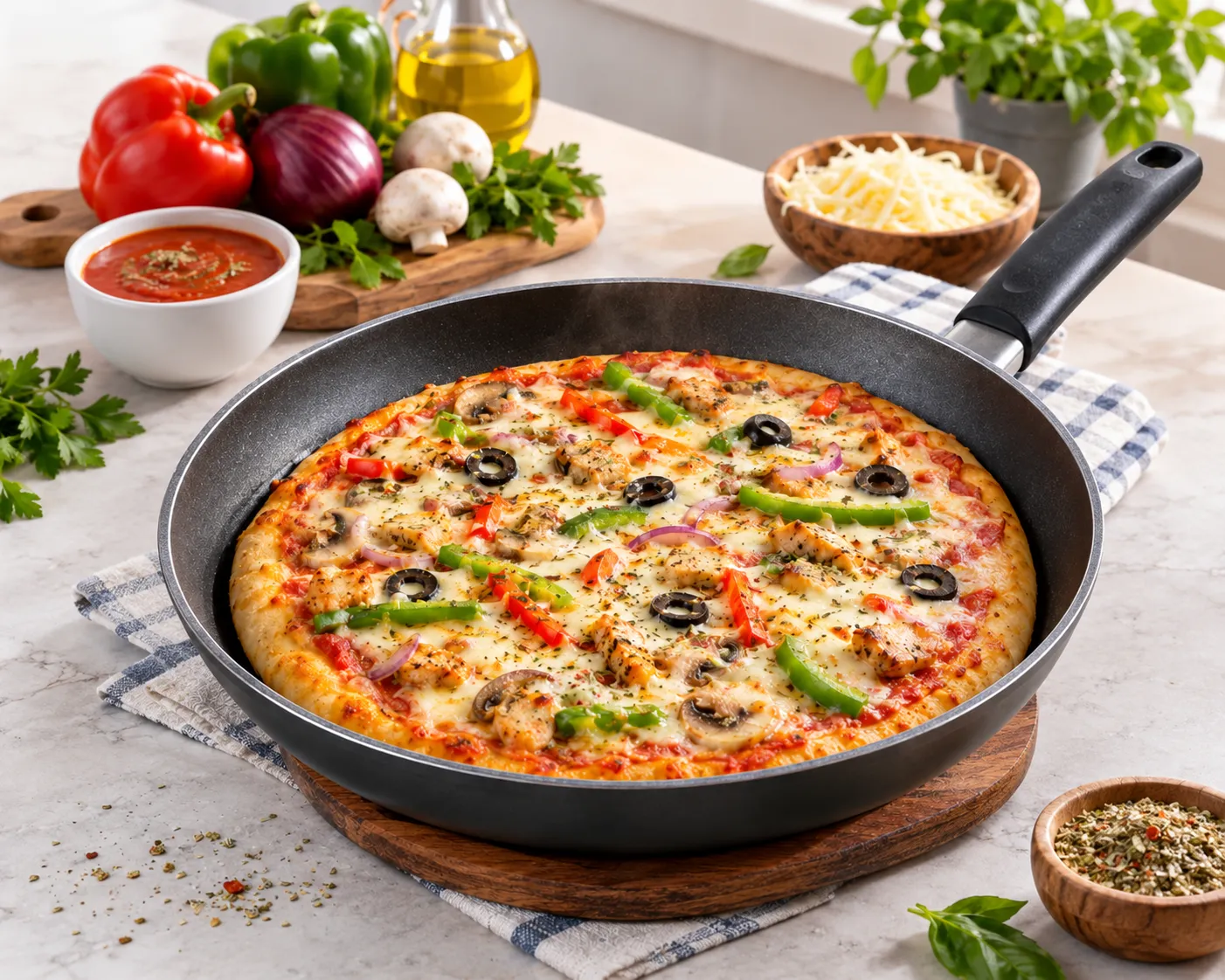
Want to make homemade pizza without an oven? You can prepare a delicious homemade pizza right on your stovetop using a regular frying pan or skillet. With simple ingredients, your favorite toppings, and a few easy steps, you can enjoy fresh pizza at home without special equipment.
The secret to making great stovetop pizza is cooking the dough over low heat in a covered, heavy-bottomed pan. This helps the base cook evenly, prevents burning, and traps enough heat to melt the cheese and warm the toppings.
Whether you need a quick lunch, an easy dinner, or a weekend snack, this homemade pizza recipe is a simple way to satisfy your pizza cravings without an oven.
How to Make Homemade Pizza Without an Oven
Making homemade pizza on the stovetop is easier than you might think. You only need a frying pan, a lid, basic dough ingredients, pizza sauce, cheese, and your favorite toppings.
The pan cooks the bottom of the pizza, while the lid traps heat to help cook the dough and melt the cheese. Although stovetop pizza does not have exactly the same texture as oven-baked pizza, it can still have a soft center and a golden, lightly crispy crust.
For beginners, a covered skillet is one of the easiest methods because it requires no special pizza equipment.
Easy Homemade Pizza Recipe Without an Oven
This homemade pizza recipe makes one medium pizza, approximately 8–9 inches wide. You can customize the toppings with vegetables, chicken, olives, or extra cheese.
Ingredients and Measurements
For the pizza dough:
- 1 cup (125 g) all-purpose flour
- ⅓ cup (80 ml) warm water, added gradually
- ½ teaspoon instant yeast
- ½ teaspoon sugar
- ¼ teaspoon salt
- 1 tablespoon olive oil or neutral cooking oil, divided
For the pizza toppings:
- 2–3 tablespoons thick pizza sauce
- ½–¾ cup (50–75 g) shredded low-moisture mozzarella cheese
- 2 tablespoons chopped bell peppers
- 1–2 tablespoons sliced onions
- 1–2 tablespoons sliced olives or cooked chicken, optional
- ¼ teaspoon dried oregano or Italian seasoning, optional
Equipment needed:
A heavy-bottomed frying pan or skillet with a lid, a mixing bowl, a spoon, and a rolling pin or clean hands.
Step 1: Prepare the Homemade Pizza Dough
Start by combining the flour, sugar, salt, and instant yeast in a mixing bowl. Gradually add the warm water and approximately half a tablespoon of oil.
Mix the ingredients until a rough dough forms. Knead the dough for 5–8 minutes until it becomes smooth and elastic.
If the dough feels too dry, add a little water. If it is excessively sticky, sprinkle in a small amount of flour.
Cover the bowl with a clean kitchen towel and leave it in a warm place for 45–60 minutes, or until the dough has noticeably risen.
Kneading develops the dough’s structure, while resting allows the yeast to produce gas. This creates a softer, lighter homemade pizza base instead of a dense crust.
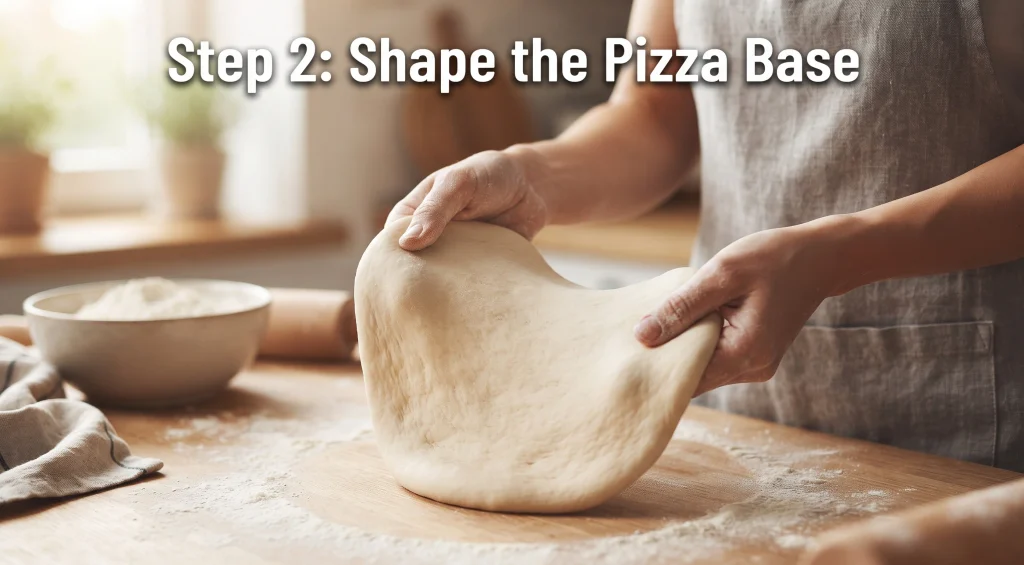
Step 2: Shape the Pizza Base
Lightly flour a clean work surface and place the risen dough on it. Use a rolling pin or your hands to shape it into an 8–9-inch circle that fits your skillet.
Aim for an even thickness of approximately ¼ inch or slightly less. Keeping the dough thin helps it cook through before the bottom becomes too dark.
If the dough keeps shrinking while you shape it, let it rest for another 5–10 minutes. This relaxes the gluten and makes the dough easier to handle.
An evenly shaped base is one of the most important secrets to making homemade pizza successfully on the stovetop.
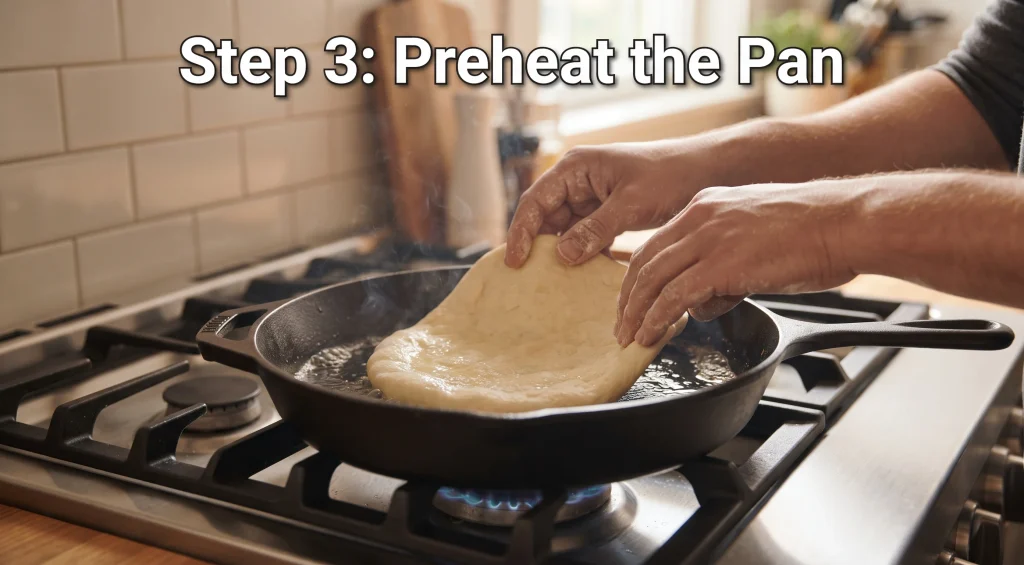
Step 3: Cook the Pizza Base in a Skillet
Place a heavy-bottomed skillet over low to medium-low heat and allow it to warm for 1–2 minutes. Lightly grease the pan with a little oil.
Carefully place the shaped dough into the skillet. Cook it uncovered for approximately 2–3 minutes, checking the underside occasionally.
When the bottom begins to set and develops light golden spots, carefully flip the base using a spatula.
Keep the heat moderate or low. Excessive heat can burn the bottom while leaving the center of the homemade pizza undercooked.
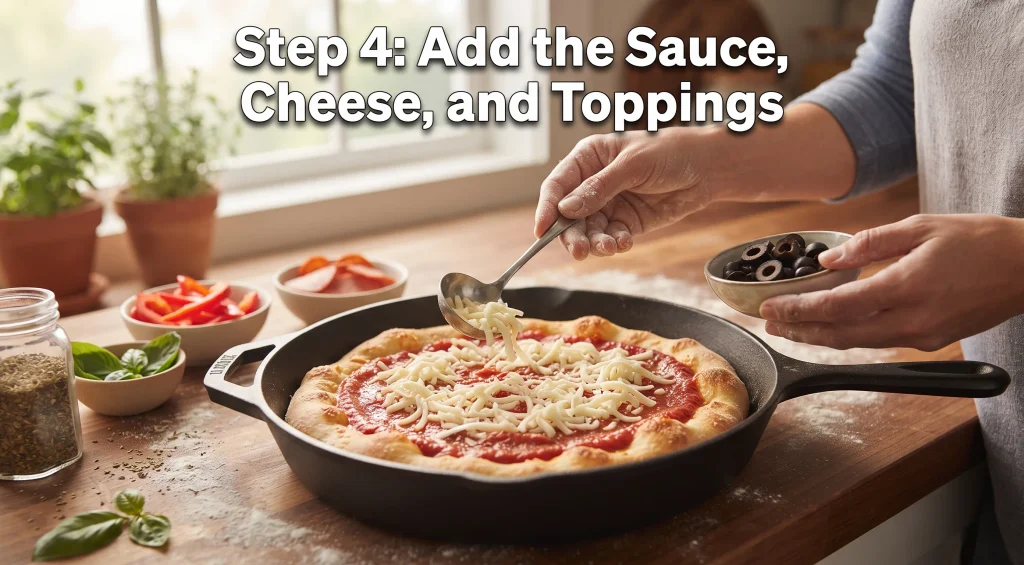
Step 4: Add the Sauce, Cheese, and Toppings
Spread 2–3 tablespoons of thick pizza sauce over the cooked side of the base, leaving a small border around the edges.
Sprinkle the mozzarella cheese evenly over the sauce. Add your preferred toppings, such as bell peppers, onions, olives, mushrooms, or cooked chicken.
Avoid adding too much sauce or too many toppings. Excess moisture can make the center soggy and prevent the homemade pizza from cooking evenly.
Always cook chicken and other meat toppings completely before adding them to the pizza. The short stovetop cooking time may not be sufficient to cook raw meat safely.
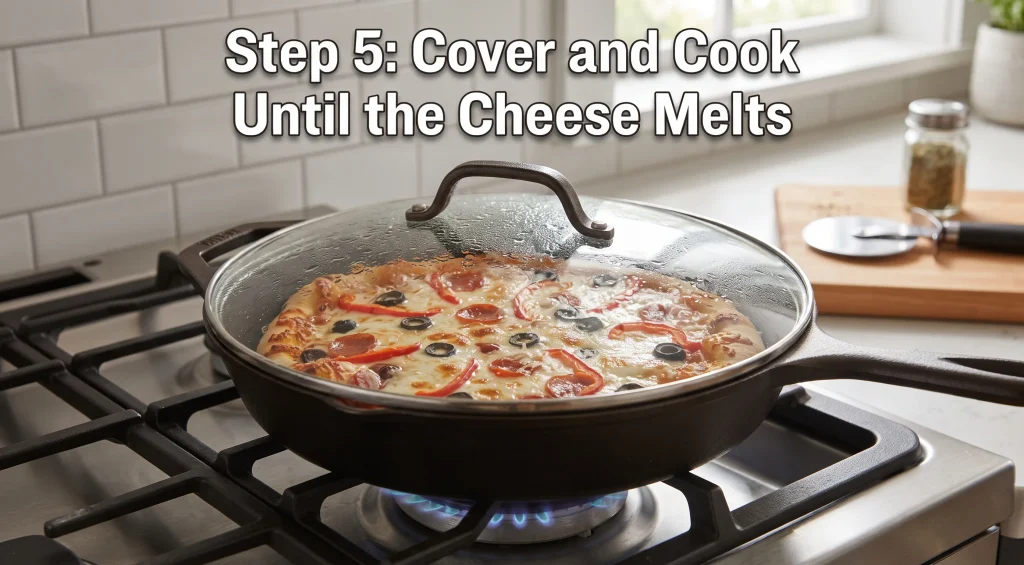
Step 5: Cover and Cook Until the Cheese Melts
Reduce the heat to low and cover the skillet with a well-fitting lid.
Cook for approximately 5–8 minutes, checking after a few minutes to monitor the crust and toppings.
The trapped heat helps melt the mozzarella, warm the toppings, and finish cooking the dough. If condensation collects on the lid, carefully remove the lid away from the heat and wipe it dry before replacing it.
Cooking time depends on the thickness of the dough, the type of pan, the stove, and the quantity of toppings.
Your homemade pizza is ready when the base is cooked through, the cheese has melted, and the toppings are hot.
If the bottom starts browning too quickly, reduce the heat further. A thinner base and a snug-fitting lid can help the pizza cook more evenly.
Step 6: Rest, Slice, and Serve
Once the cheese has melted and the crust is cooked, carefully remove the pizza from the skillet.
Let it rest for 1–2 minutes on a cutting board before slicing. This brief resting period makes it easier to cut and serve.
Sprinkle dried oregano, chili flakes, or fresh basil over the top for extra flavor.
Serve your homemade pizza hot with a fresh salad, garlic dip, or your favorite side dish.
Tips for a Crispy Homemade Pizza Crust
A few simple adjustments can improve the texture and flavor of your stovetop pizza.
- Use a heavy-bottomed pan: It distributes heat more evenly and reduces the risk of burning.
- Keep the heat low: Gentle heat cooks the dough while allowing the cheese to melt.
- Roll the dough evenly: A thin, consistent base cooks more reliably than a thick center.
- Choose thick pizza sauce: Watery sauce can make the crust soggy.
- Use low-moisture mozzarella: It melts well and usually releases less moisture than fresh mozzarella.
- Limit the toppings: Too many toppings can slow cooking and make the center wet.
- Keep the lid on: Removing it repeatedly allows heat to escape and extends the cooking time.
- Check the bottom carefully: For a slightly crispier crust, uncover the skillet for the final 30–60 seconds, watching closely to prevent burning.
These tips can help you prepare homemade pizza with a better crust, melted cheese, and evenly heated toppings.
Common Homemade Pizza Mistakes to Avoid
1. Cooking Over High Heat
High heat can burn the bottom before the dough cooks through. Start with low to medium-low heat and reduce it further after adding the toppings.
2. Making the Dough Too Thick
A thick base takes longer to cook and may remain doughy in the middle. Roll the dough evenly and keep it relatively thin for the best results.
3. Adding Too Much Sauce or Cheese
Excess sauce can make the crust soggy, while too much cheese can take longer to melt. Begin with the recommended quantities and adjust them to your taste.
4. Using Raw Meat or Too Many Wet Vegetables
Raw meat may not reach a safe temperature during the short cooking time. Use fully cooked meat and add vegetables in moderate quantities.
For moisture-heavy ingredients, such as mushrooms, consider sautéing them briefly before adding them to the pizza.
5. Expecting an Oven-Baked Finish
A stovetop pizza may not develop the same browned cheese and crust as a pizza cooked in an oven. The goal is a fully cooked base, melted cheese, and hot toppings.
Other Ways to Make Pizza Without an Oven
A skillet is an excellent option, but other appliances can also help you make pizza without a conventional oven.
Frying Pan or Skillet
A covered frying pan is affordable, simple, and ideal for preparing a single homemade pizza. It is especially useful for people who have limited kitchen equipment.
Air Fryer
An air fryer can cook small pizzas quickly, depending on the appliance and the thickness of the dough. Follow the manufacturer’s instructions and check that the base is cooked through.
Covered Outdoor Grill
A covered grill can also cook pizza if you can control the heat. Use a suitable heat-safe surface and monitor the bottom carefully to prevent burning.
For beginners, the covered skillet remains one of the simplest methods because it requires only a stovetop and a few everyday ingredients.
Frequently Asked Questions
Can you make homemade pizza on a stovetop?
Yes. You can make homemade pizza in a frying pan or skillet. Cook the base, add sauce, cheese, and toppings, then cover the pan and finish cooking over low heat until the dough is cooked and the cheese melts.
How can I make pizza without yeast?
You can prepare a quick pizza dough using flour, baking powder, salt, and yogurt or water. The texture will differ from yeast-based dough, so keep the base thin and adjust the liquid until the dough is workable.
How do you melt pizza cheese without an oven?
Place the topped pizza in a skillet and cover it with a lid. Cook over low heat so the trapped warmth melts the cheese without burning the crust.
Why is my stovetop pizza doughy in the middle?
The dough may be too thick, or the heat may be too high. Roll the base more evenly, reduce the temperature, and allow additional cooking time with the lid on.
Can I use store-bought pizza dough?
Yes. Store-bought dough works well for homemade pizza. Let it rest according to the package instructions, shape it to fit your skillet, and follow the same cooking method.
What is the best cheese for stovetop pizza?
Low-moisture mozzarella is a great choice because it melts well and generally releases less water than fresh mozzarella. You can mix in a little cheddar for a stronger flavor.
How long does homemade pizza take to cook without an oven?
The cooking time varies, but this recipe generally requires 45–60 minutes for the dough to rise, plus preparation and approximately 7–11 minutes of skillet cooking. The exact time depends on the dough, pan, and toppings.
Can I make a crispy pizza in a frying pan?
Yes. Use a thin, evenly rolled base, a heavy-bottomed skillet, and controlled heat. Avoid excessive toppings and uncover the pan for the final 30–60 seconds if the bottom needs additional crispness.
Conclusion
Making homemade pizza without an oven is simple when you use a covered skillet and control the heat carefully. Prepare a soft dough, roll it into a thin base, add a moderate amount of sauce and toppings, and cook slowly until the crust is done and the cheese melts.
With the right technique, you can enjoy a flavorful homemade pizza using everyday kitchen equipment. Experiment with different cheeses, sauces, vegetables, and cooked meats to discover your favorite combination.
Whether you are preparing a quick lunch or an easy dinner, this no-oven pizza recipe is a practical way to enjoy fresh pizza at home without needing a conventional oven.