Egg Substitute: 7 Best Easy Swaps

No eggs? No need to give up on your baking plans. Choosing the right egg substitute can help you make delicious cookies, cakes, brownies, muffins, and other baked goods without eggs. Whether you have run out of eggs or follow an egg-free diet, there are several simple alternatives you can use in your kitchen.
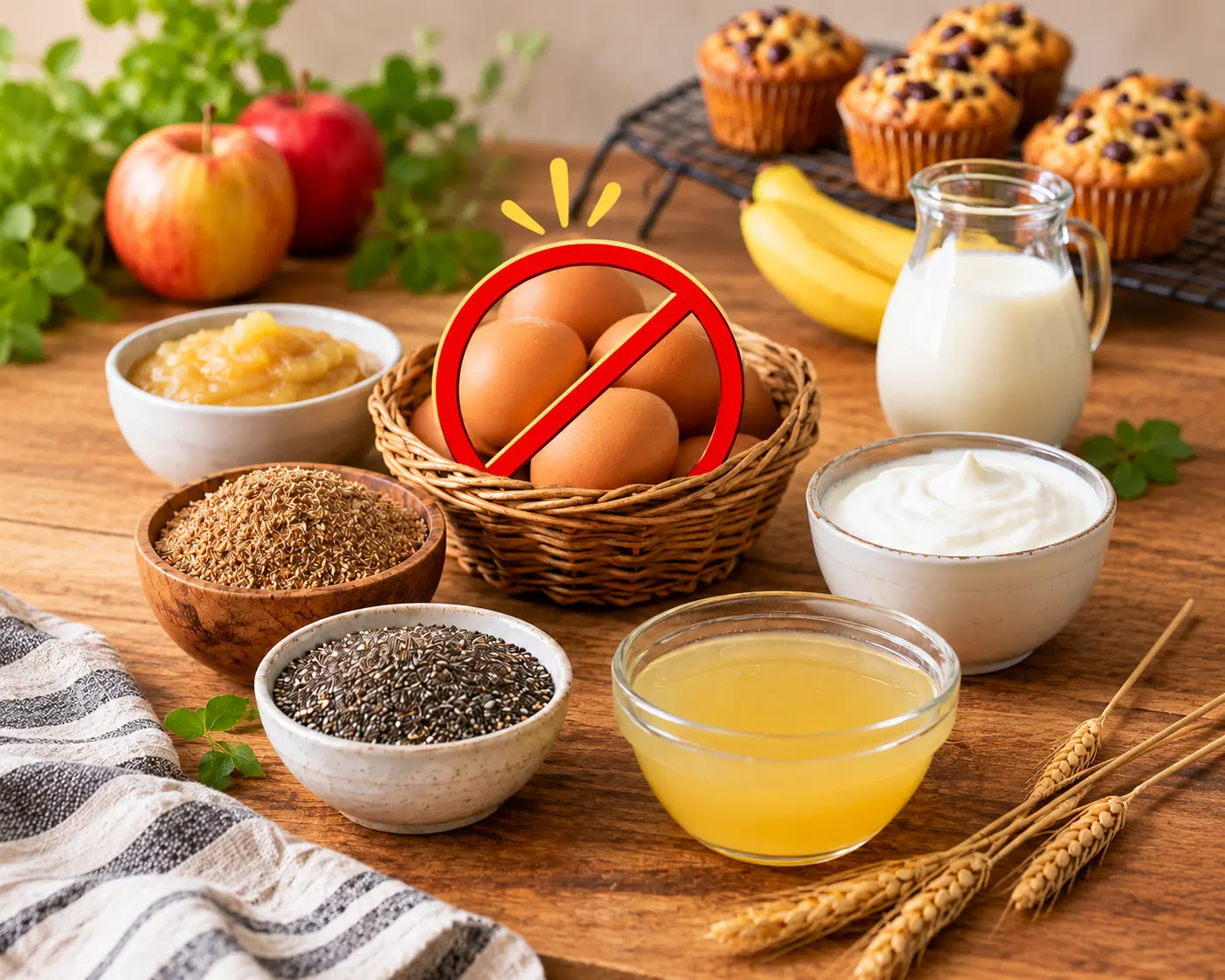
The best egg substitute depends on your recipe because eggs perform several important functions in baking. They add moisture, bind ingredients together, provide structure, and help some baked goods rise. Applesauce adds moisture, ground flaxseed helps bind ingredients, and aquafaba can be whipped to create a light, airy texture.
However, not every egg substitute works equally well in every recipe. Some alternatives are ideal for dense brownies, while others work better in muffins, cookies, and cakes. This guide explains seven useful egg substitutes, how much to use, and how to choose the right option for your favorite baked goods.
Best Egg Substitute Options for Baking
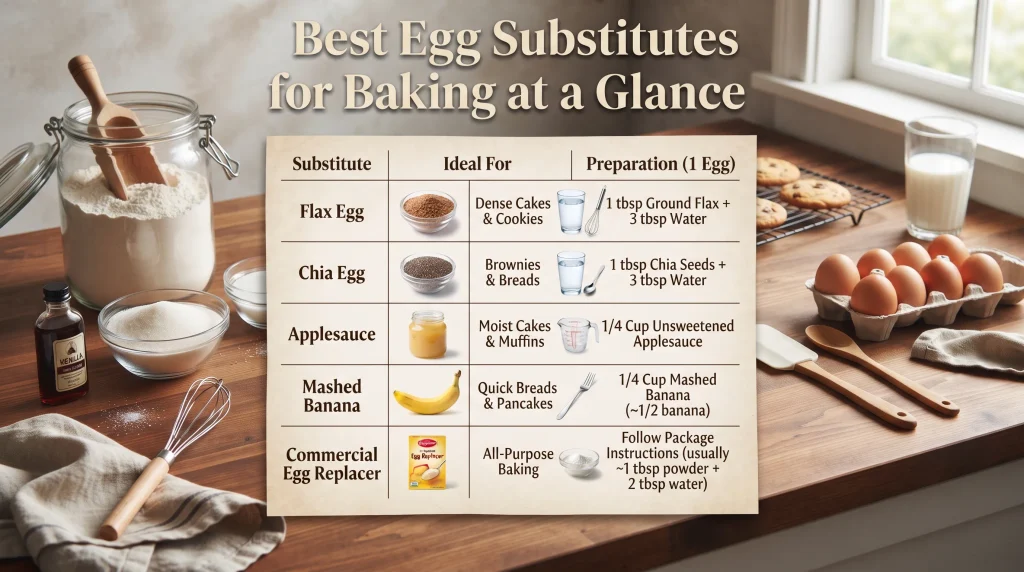
Choosing an appropriate egg substitute starts with understanding what each ingredient does. The following alternatives are common options for replacing one large egg in suitable recipes.
| Egg Substitute | Amount for 1 Egg | Best For |
|---|---|---|
| Ground flaxseed | 1 tablespoon flaxseed meal + 3 tablespoons water | Cookies, brownies, quick breads |
| Ground chia seeds | 1 tablespoon ground chia seeds + 3 tablespoons water | Muffins, cookies, dense cakes |
| Unsweetened applesauce | 1/4 cup (about 60 g) | Muffins, quick breads, some cakes |
| Mashed ripe banana | 1/4 cup (about 60 g) | Banana bread, muffins, brownies |
| Plain yogurt | 1/4 cup (about 60 g) | Muffins, quick breads, some cakes |
| Milk or buttermilk | About 1/4 cup (60 ml), when suitable | Moist cakes and quick breads |
| Aquafaba | 3 tablespoons (45 ml) | Cookies, some cakes, meringue-style recipes |
| Commercial egg replacer | Follow package instructions | Recipes specified by the manufacturer |
These quantities are starting points rather than universal guarantees. A recipe containing several eggs may need more adjustments than a recipe that uses just one. When possible, choose a tested egg-free recipe for the most reliable results.
7 Best Egg Substitute Alternatives for Baking
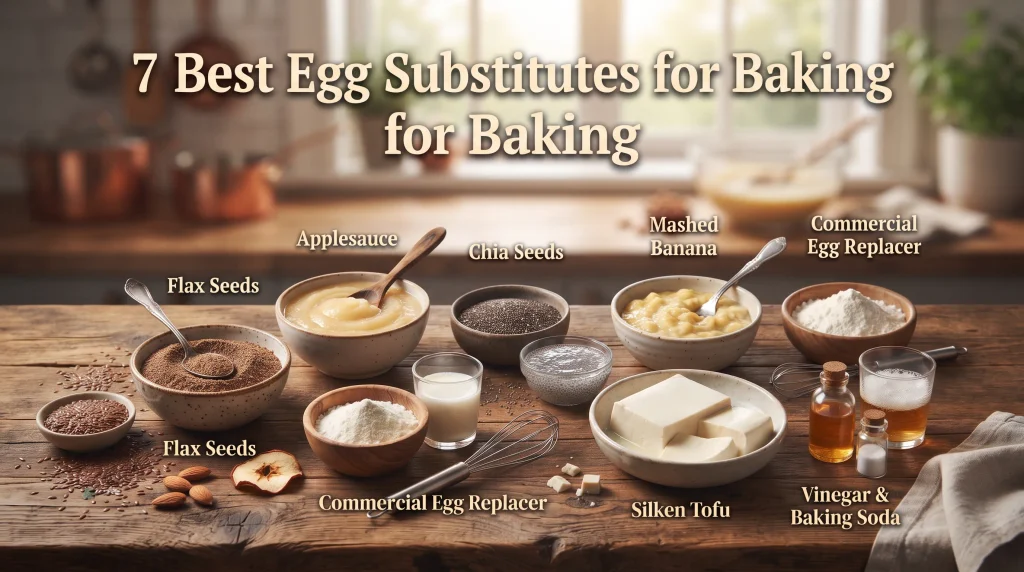
1. Ground Flaxseed or Chia Seeds
A flax egg is a popular egg substitute for everyday baking. It combines ground flaxseed with water to create a thick, gel-like mixture that helps hold ingredients together.
How to Make a Flax Egg
- Add 1 tablespoon of ground flaxseed to a small bowl.
- Mix in 3 tablespoons of water.
- Let the mixture rest for 5–10 minutes until it thickens.
- Add it to your batter or dough in place of one egg.
Ground chia seeds can be prepared in the same way. Both options work well in cookies, brownies, muffins, and quick breads.
The main limitation is texture. A flax egg may make delicate cakes heavier and can leave visible flecks in pale-colored baked goods. This egg substitute is most useful when binding is more important than creating a fluffy texture.
2. Unsweetened Applesauce
Unsweetened applesauce adds moisture and mild sweetness, making it a convenient egg substitute for muffins, quick breads, and some cakes.
Use approximately 1/4 cup of unsweetened applesauce for each egg you want to replace. Choosing an unsweetened variety gives you better control over the sweetness of your recipe.
Applesauce does not provide the same structure or aeration as eggs. As a result, your baked goods may turn out softer or denser than expected. It works best in recipes that already have enough structure from flour and a suitable leavening agent.
If your recipe already contains plenty of liquid, you may need to adjust the other ingredients carefully rather than adding extra moisture without considering the overall balance.
3. Mashed Ripe Banana
Mashed ripe banana is an easy egg substitute if you enjoy its flavor. It adds moisture, helps bind ingredients, and works particularly well in banana bread, muffins, and brownies.
Replace one egg with approximately 1/4 cup of mashed ripe banana.
The main disadvantage is its distinctive taste. Banana can overpower delicate vanilla cakes or recipes where you want a neutral flavor. It also contributes natural sweetness, so you may need to reduce the sugar slightly depending on the recipe.
For the best results, use a ripe banana that mashes easily. This option is especially useful for dense, moist baked goods rather than light sponge cakes.
4. Plain Natural Yogurt
Plain yogurt helps keep baked goods moist and can provide some binding. It is a useful egg substitute for muffins, quick breads, and certain cakes.
Start with approximately 1/4 cup of plain yogurt per egg. Regular yogurt and Greek yogurt can both work, although Greek yogurt is thicker and may change the consistency of your batter.
Yogurt does not fully replace the structure and aeration that eggs provide. It is generally more reliable in moist baked goods than in recipes that depend on whipped eggs for a light, delicate crumb.
For dairy-free baking, choose an unsweetened plant-based yogurt that suits your recipe. Check its thickness because different varieties can affect the batter in different ways.
5. Milk or Buttermilk
Milk and buttermilk add moisture to baked goods, making them possible egg substitute options in certain recipes. Buttermilk also provides acidity, which can react with baking soda to help produce a lighter texture.
As a starting point, approximately 1/4 cup of buttermilk may work in some recipes. However, this substitution is not suitable for every cake or cookie because milk alone does not provide the same binding and structure as eggs.
When using milk or buttermilk, consider the amount of liquid already included in your recipe. Too much liquid can create a gummy center or prevent the baked product from setting properly.
This option works best when the original recipe can accommodate the additional liquid and its leavening ingredients can be adjusted if needed.
6. Commercial Egg Replacer
A commercial egg replacer is often a convenient choice when you want a neutral flavor and predictable results. These products are specifically formulated for baking or cooking and may contain starches, leavening agents, or other ingredients that help with binding and texture.
Follow the manufacturer’s instructions because the required quantity varies by product. Some replacers are designed for cakes and cookies, while others are intended for different applications.
If you need an egg substitute for a delicate cake, a product formulated specifically for baking may be more dependable than fruit purée or a flax mixture. However, no product is guaranteed to work equally well in every recipe.
If you are avoiding eggs because of an allergy, check the complete ingredient list and allergen statements. Also consider cross-contact during preparation.
7. Aquafaba
Aquafaba is the liquid from cooked chickpeas, including the liquid found in canned chickpeas. It contains components that help stabilize foam, making it a particularly useful egg substitute in recipes that need aeration.
Use approximately 3 tablespoons of aquafaba to replace one egg in suitable recipes.
Unlike applesauce or mashed banana, aquafaba can be whipped into a light foam. This makes it useful for certain cakes, cookies, and meringue-style preparations.
Results depend on the thickness and concentration of the liquid. If aquafaba is too watery, reducing it gently and allowing it to cool may improve its consistency. When using whipped aquafaba, fold it into the batter carefully to preserve as much air as possible.
How to Choose the Best Egg Substitute
The best egg substitute depends on what eggs are doing in your particular recipe. Consider the desired texture, flavor, moisture, and amount of lift before choosing an alternative.

Best Egg Substitute for Cookies
Ground flaxseed and commercial egg replacers are useful starting points for cookies. A flax egg helps bind the dough, while a commercial product may offer a more neutral flavor.
Applesauce can work in softer cookies, but it may change how much the dough spreads and how chewy the finished cookies become.
Best Egg Substitute for Brownies
Flax eggs, applesauce, and mashed banana can work well in many dense brownie recipes. They help retain moisture and create a fudgy texture.
Choose banana if its flavor complements the chocolate. For a more neutral taste, try a flax egg or unsweetened applesauce in a suitable recipe.
Best Egg Substitute for Muffins and Quick Breads
Applesauce, yogurt, mashed banana, and flax eggs are useful choices for muffins and quick breads. These recipes can often accommodate a moist, slightly denser texture.
Choose the ingredient that best matches the other flavors in your recipe. For example, banana works naturally in banana muffins, while plain yogurt can be a better choice when you want a more neutral flavor.
Best Egg Substitute for Cakes
Cakes can be more challenging because eggs help provide structure, moisture, and volume. A commercial egg replacer designed for cakes or a tested egg-free cake recipe is usually the safest starting point.
Fruit purées and flax eggs may work in some dense cakes, but they are less reliable in delicate sponge cakes that depend on eggs for aeration.
Best Egg Substitute for Meringue-Style Recipes
Aquafaba is generally a better choice than flaxseed or fruit purée when a recipe requires a whipped foam. It can be beaten to incorporate air, making it suitable for certain meringues and other aerated preparations.
Remember that replacing multiple eggs is more complicated than replacing a single egg. If a recipe relies on several eggs for volume and structure, use a tested egg-free version whenever possible.
Easy Egg-Free Banana Muffins Recipe
These easy banana muffins are a simple introduction to egg-free baking. Mashed banana adds moisture and helps bind the ingredients, while baking powder provides lift.
Ingredients
| Ingredient | Quantity |
|---|---|
| All-purpose flour | 1 1/2 cups (about 190 g) |
| Ripe bananas, mashed | 2 medium (about 200 g without peel) |
| Granulated sugar | 1/3 cup (about 65 g) |
| Milk or unsweetened plant milk | 1/4 cup (60 ml) |
| Neutral oil | 1/4 cup (60 ml) |
| Baking powder | 1 1/2 teaspoons |
| Baking soda | 1/4 teaspoon |
| Salt | 1/4 teaspoon |
| Vanilla extract | 1 teaspoon |
Instructions
- Preheat the oven. Set the oven to 350°F (175°C). Line a standard muffin tin with paper liners or lightly grease the cups.
- Mix the wet ingredients. Mash the bananas in a bowl. Add the sugar, milk, oil, and vanilla extract, then stir until combined.
- Combine the dry ingredients. In a separate bowl, whisk together the flour, baking powder, baking soda, and salt.
- Prepare the batter. Add the dry ingredients to the wet mixture. Stir gently until no large pockets of dry flour remain. Avoid overmixing.
- Fill the muffin tin. Divide the batter among the prepared cups, filling each approximately two-thirds to three-quarters full.
- Bake the muffins. Bake for about 18–24 minutes, or until the tops spring back lightly and a toothpick inserted into the center comes out without wet batter.
- Cool before serving. Leave the muffins in the tin for a few minutes, then transfer them to a wire rack.
Baking tip: These muffins will generally be moister and denser than muffins made with eggs. Use ripe bananas for better flavor and allow the muffins to cool before judging their final texture.

Common Egg Substitute Mistakes to Avoid
Even a good egg substitute can produce disappointing results if it is used incorrectly. Keep these common mistakes in mind when adapting a recipe.
- Ignoring texture: Fruit purées may work in brownies but can weigh down a delicate sponge cake.
- Adding too much liquid: Excess moisture can create a gummy or underbaked center. Measure ingredients carefully.
- Expecting every substitute to provide lift: Flaxseed and applesauce mainly help with binding and moisture. They do not behave like whipped eggs.
- Overmixing the batter: Excessive mixing can make muffins and quick breads tough after flour is added.
- Overlooking flavor: Banana and applesauce can noticeably change the flavor of baked goods, while flaxseed may be visible in light-colored batters.
- Using the wrong commercial product: Different egg replacers have different purposes. Always follow the product instructions.
For the most reliable results, especially with layer cakes and delicate desserts, use a recipe that has already been tested without eggs.
Frequently Asked Questions About Egg Substitutes
1. What is the best egg substitute for general baking?
A commercial egg replacer is a good starting point if you want a neutral flavor and a product designed for baking. A flax egg is another useful option for many cookies, brownies, muffins, and quick breads.
2. Can oil replace eggs in a cake?
Oil adds fat and moisture but does not provide the same binding, structure, or aeration as eggs. It is therefore not a reliable one-for-one egg substitute on its own.
3. Can you make a cake without eggs?
Yes. Many cakes can be made without eggs, but the best results usually come from a tested egg-free cake recipe or a commercial replacer formulated for cakes.
4. How much applesauce replaces one egg?
Use approximately 1/4 cup (60 g) of unsweetened applesauce for one egg in suitable recipes. The finished texture may be softer or denser.
5. Can I use a flax egg in cookies?
Yes. Mix 1 tablespoon of ground flaxseed with 3 tablespoons of water and let it thicken for 5–10 minutes. Add the mixture to your cookie dough in place of one egg.
6. Are egg substitutes safe for people with egg allergies?
Many egg substitutes are suitable for people avoiding eggs, but always check ingredient labels and allergen warnings. If the allergy is severe, take precautions against cross-contact during food preparation.
Final Thoughts
Choosing the right egg substitute depends on the texture, flavor, and structure your recipe needs. Flax eggs help bind ingredients, applesauce and banana add moisture, yogurt contributes to a soft crumb, commercial replacers offer convenience, and aquafaba can create a useful whipped foam.
Start with an alternative that suits your recipe, measure carefully, and remember that replacing several eggs may require more than a simple ingredient swap. With the right approach, you can make delicious egg-free muffins, cookies, brownies, and many other baked goods.