
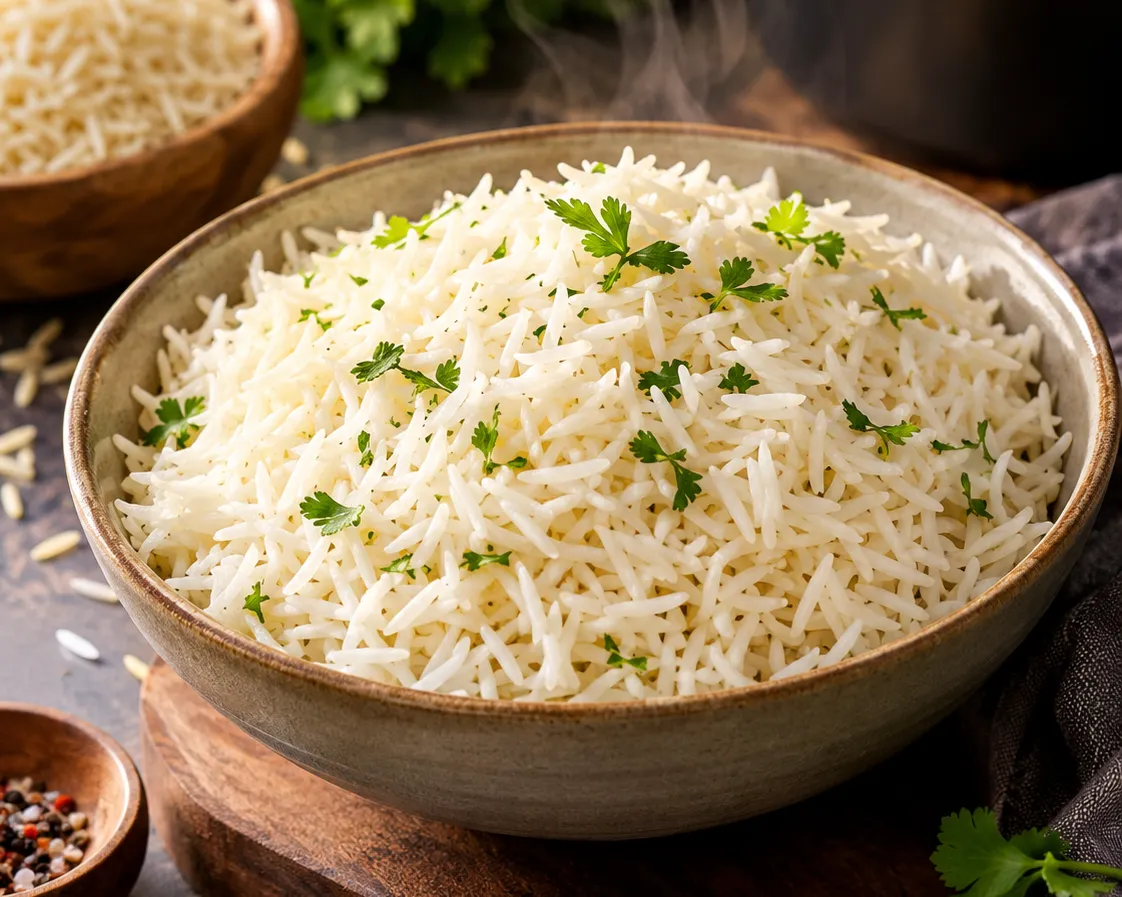
Basmati Rice: 7 Tips for Fluffy Rice

Basmati rice is famous for its delicate aroma, long grains, and fluffy texture. When cooked correctly, the grains remain tender and separate instead of becoming sticky or mushy. The secret to perfect basmati rice is simple: rinse the grains, measure the water accurately, and cook over low heat.
Whether you are preparing curry, grilled vegetables, lentils, or a family dinner, learning how to cook basmati rice properly can improve every meal. This guide explains the correct water ratio, preparation methods, cooking time, and common mistakes to avoid.
Why Does Basmati Rice Get Sticky?
Basmati rice can become sticky because of excess surface starch, too much water, overcooking, or frequent stirring. Understanding these causes helps you achieve better results.
1. Excess Surface Starch
Uncooked rice contains loose starch on its surface. When this starch enters the cooking water, the grains can stick together. Rinsing basmati rice three or four times removes much of this loose starch and helps create a fluffy texture.
2. Too Much Water
Adding excessive water makes the grains soft and mushy. Accurate measurements allow basmati rice to absorb enough moisture without losing its shape.
3. Excessive Stirring
Repeated stirring can break the grains and release additional starch. Avoid unnecessary mixing and allow the rice to cook undisturbed.
4. High Cooking Temperature
Cooking at high heat causes water to evaporate too quickly, potentially leaving the grains hard in the center. Reduce the heat after boiling and keep the saucepan covered.
How to Cook Perfect Basmati Rice Without Sticking
This simple stovetop absorption method produces aromatic, separate grains. The quantities below make approximately four side-dish servings.
Ingredients
- 1 cup basmati rice (approximately 180–200 g)
- 1¼ cups water (approximately 300 ml)
- ¼–½ teaspoon salt, optional
- 1 teaspoon neutral oil or butter, optional
The ideal water ratio depends on the rice variety, soaking time, saucepan, and lid. Check the package instructions for the most suitable measurements.
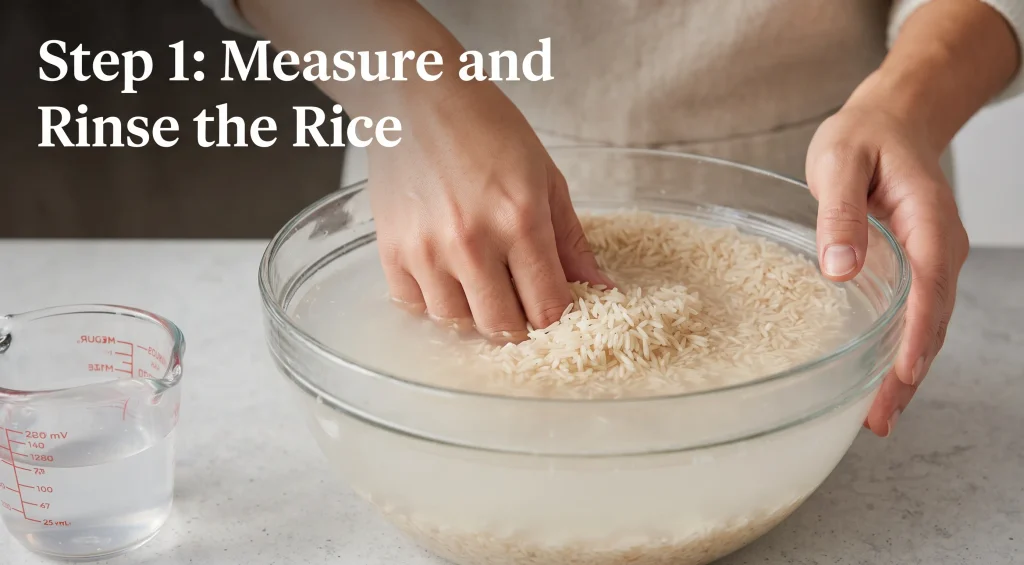
Step 1: Measure and Rinse the Rice
Place one cup of basmati rice in a bowl and add cold water. Gently swirl the grains with your fingers, drain the cloudy water, and repeat three or four times until the water becomes noticeably clearer.
Rinsing removes excess surface starch and helps prevent clumping. This step is particularly useful when preparing fluffy rice to serve with curries, vegetables, or grilled meat.
Step 2: Soak the Grains (Optional)
Cover the rinsed rice with fresh water and soak for 15–20 minutes. Drain thoroughly before cooking.
Soaking can help the grains cook more evenly and may encourage longer grains. However, soaked rice contains additional moisture and may require less cooking water.
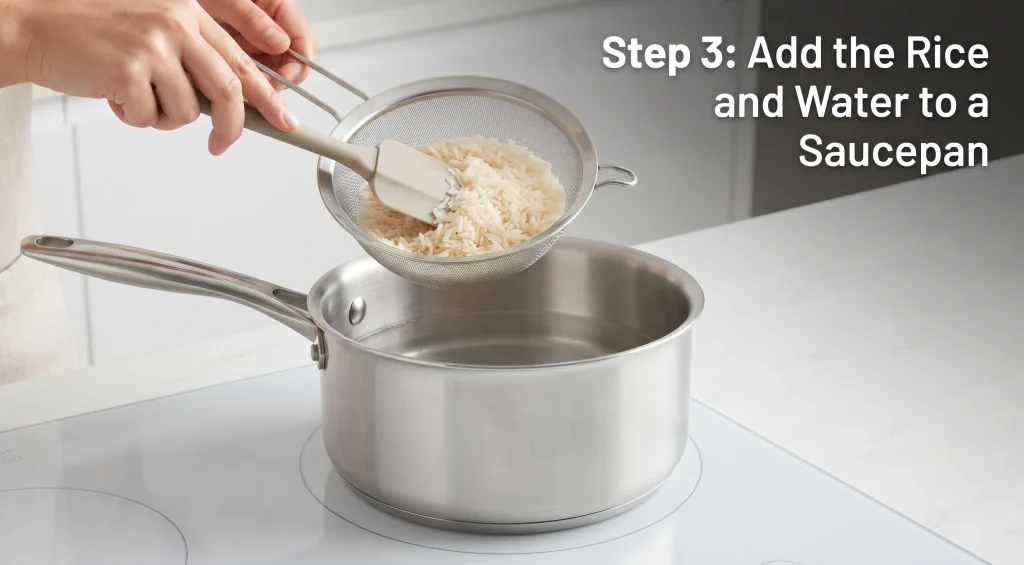
Step 3: Add Water and Seasoning
Transfer the drained rice to a saucepan with a tight-fitting lid. Add the measured water, salt, and optional oil or butter.
Spread the grains evenly across the bottom of the pan. Avoid excessive stirring because keeping the grains intact helps produce a light texture.
Step 4: Bring the Water to a Boil
Place the saucepan over medium-high heat and bring the water to a boil. Reduce the heat to low and cover the pan tightly.
A gentle simmer allows the grains to absorb moisture evenly. Avoid vigorous boiling because it can cause uneven cooking and excessive evaporation.
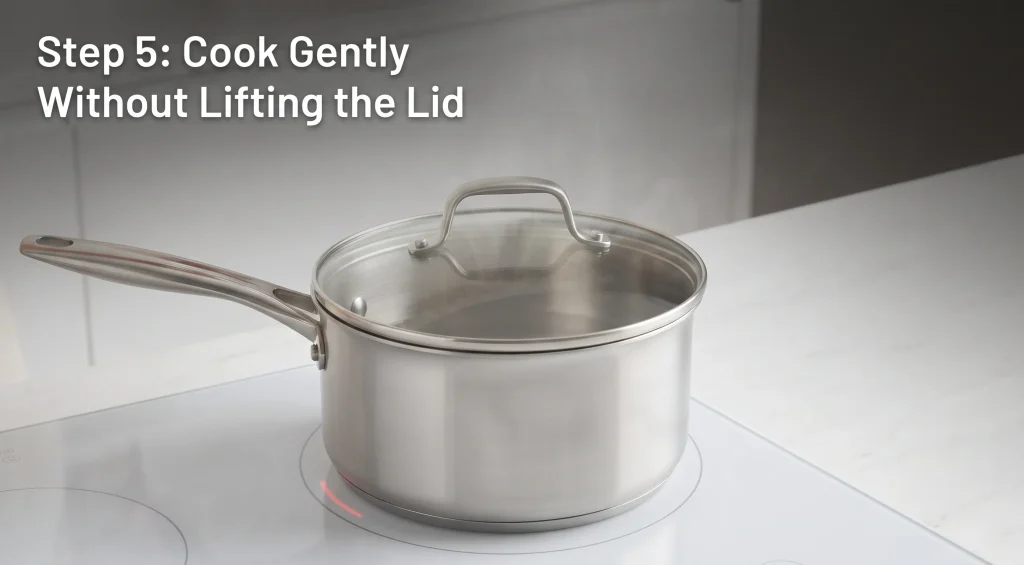
Step 5: Cook Without Stirring
Cook the covered rice over low heat for approximately 12–15 minutes, depending on the variety and whether it has been soaked.
Keep the lid closed to retain steam. Frequent checking releases moisture and may interfere with even cooking.
Step 6: Let the Rice Rest
Turn off the heat and leave the covered saucepan untouched for 10 minutes.
Resting allows moisture to distribute throughout the grains. It also helps the texture become firmer, making the rice easier to separate.
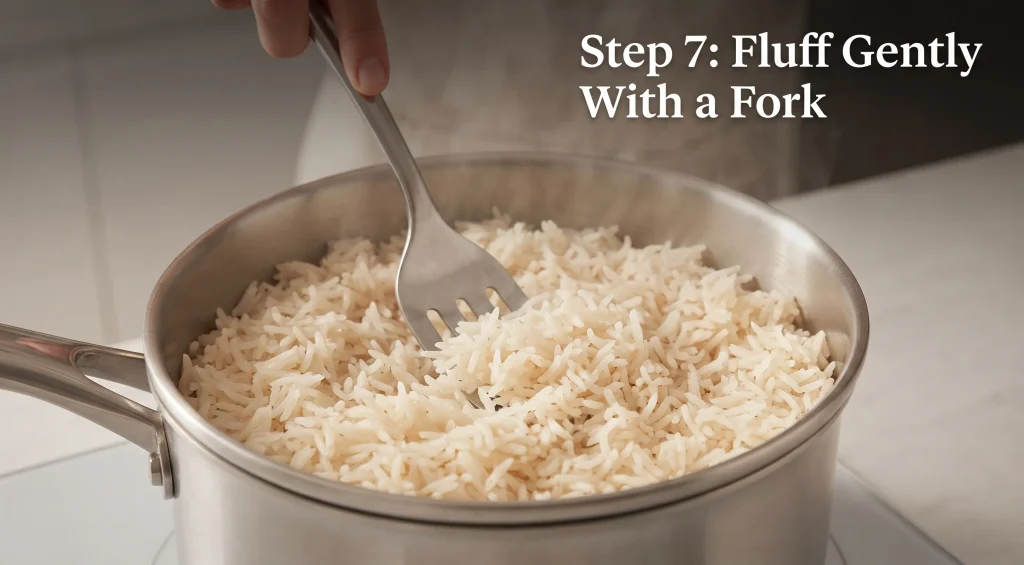
Step 7: Fluff Gently With a Fork
Remove the lid and gently lift the grains with a fork. Avoid pressing, mashing, or stirring vigorously.
Your basmati rice should now be fragrant, tender, and fluffy, with individual grains that separate easily. Serve immediately with your favourite main dish.
Tips for Fluffy Basmati Rice With Separate Grains
Follow these practical tips for consistent results every time you cook.
- Choose quality rice: Look for long, unbroken grains.
- Rinse thoroughly: Remove loose starch to reduce sticking.
- Measure water accurately: Use the same measuring cup each time.
- Avoid excessive stirring: Keep the grains intact.
- Keep the lid closed: Trapped steam promotes even cooking.
- Use low heat: Prevent the bottom from burning.
- Allow resting time: Wait 10 minutes before fluffing.
- Choose a suitable saucepan: A heavy-bottomed pan distributes heat evenly.
Do You Need to Soak Basmati Rice Before Cooking?
Soaking is optional, but it can help produce longer, more evenly cooked grains. A soaking period of 15–20 minutes is a useful starting point for many varieties.
If you prefer not to soak the rice, rinse it thoroughly and use a water ratio suitable for unsoaked grains. Depending on the variety, you may need slightly more water or a different cooking time.
For reliable results, follow the package instructions and adjust the method according to your preferred texture.
Common Basmati Rice Cooking Mistakes and How to Fix Them
Why Is Basmati Rice Sticky?
Sticky rice usually results from excess surface starch, too much water, or overcooking. Rinse the grains thoroughly, measure the water accurately, and avoid unnecessary stirring.
Why Is the Rice Too Soft?
If the grains become too soft, they may have absorbed too much water or cooked for too long. Reduce the water slightly during your next attempt and check the texture near the end of the recommended cooking time.
Why Is the Center Still Hard?
Hard grains may need additional moisture or cooking time. If the water has been absorbed but the rice remains firm, add one or two tablespoons of hot water. Cover the pan and cook over low heat for a few more minutes.
Why Is the Bottom Burning?
Burning often occurs when the heat is too high or the saucepan has a thin base. Reduce the heat after boiling and consider using a heavy-bottomed pan.
What If the Rice Is Too Wet?
If the rice is nearly cooked, leave the covered pan on low heat for a few more minutes. If substantial water remains, carefully drain the excess rather than continuing to cook for too long.
Is a Rice Cooker Better Than a Stovetop?
Both methods can produce excellent results. The best option depends on your equipment and cooking preferences.
The stovetop method provides more control over heat, water ratios, and cooking time. However, it requires attention to prevent excessive boiling or burning.
A rice cooker offers convenience by automating the process. Rinse the grains, add the appropriate amount of water, and select the white rice or basmati setting if your appliance provides one.
Different varieties may require different amounts of water, so package instructions are a useful starting point for either method.
Frequently Asked Questions About Basmati Rice
1. What Is the Correct Water Ratio?
For the covered stovetop absorption method, start with approximately 1¼ cups of water for every cup of unsoaked rice. Adjust the ratio according to the variety and package instructions.
2. Should You Wash Basmati Rice Before Cooking?
Yes. Rinsing three or four times removes much of the loose surface starch and helps keep the grains separate after cooking.
3. How Long Does Basmati Rice Take to Cook?
It generally needs 12–15 minutes of gentle simmering, followed by a 10-minute covered rest. Timing varies according to the variety, soaking, and saucepan.
4. Why Does Basmati Rice Stick Together?
Clumping can occur when excess starch, too much water, or overcooking makes the grains soft. Rinsing, accurate measurements, gentle heat, and resting can improve the texture.
5. Can You Cook Basmati Rice Without Soaking?
Yes. Rinse the grains thoroughly and use the appropriate water ratio. Check the package instructions for the best results.
6. Should You Stir the Rice While Cooking?
Frequent stirring is unnecessary with the absorption method. Keep the saucepan covered and gently fluff the grains with a fork after resting.
Conclusion
Cooking perfect basmati rice does not require special equipment or complicated techniques. Rinse the grains to remove excess starch, measure the water carefully, maintain a gentle simmer, and allow the rice to rest before fluffing.
These simple habits help you prepare fluffy, aromatic rice with separate grains for curries, grilled vegetables, lentils, and family meals. With practice, you can adjust the water ratio and cooking time to suit your preferred variety and achieve consistent results